
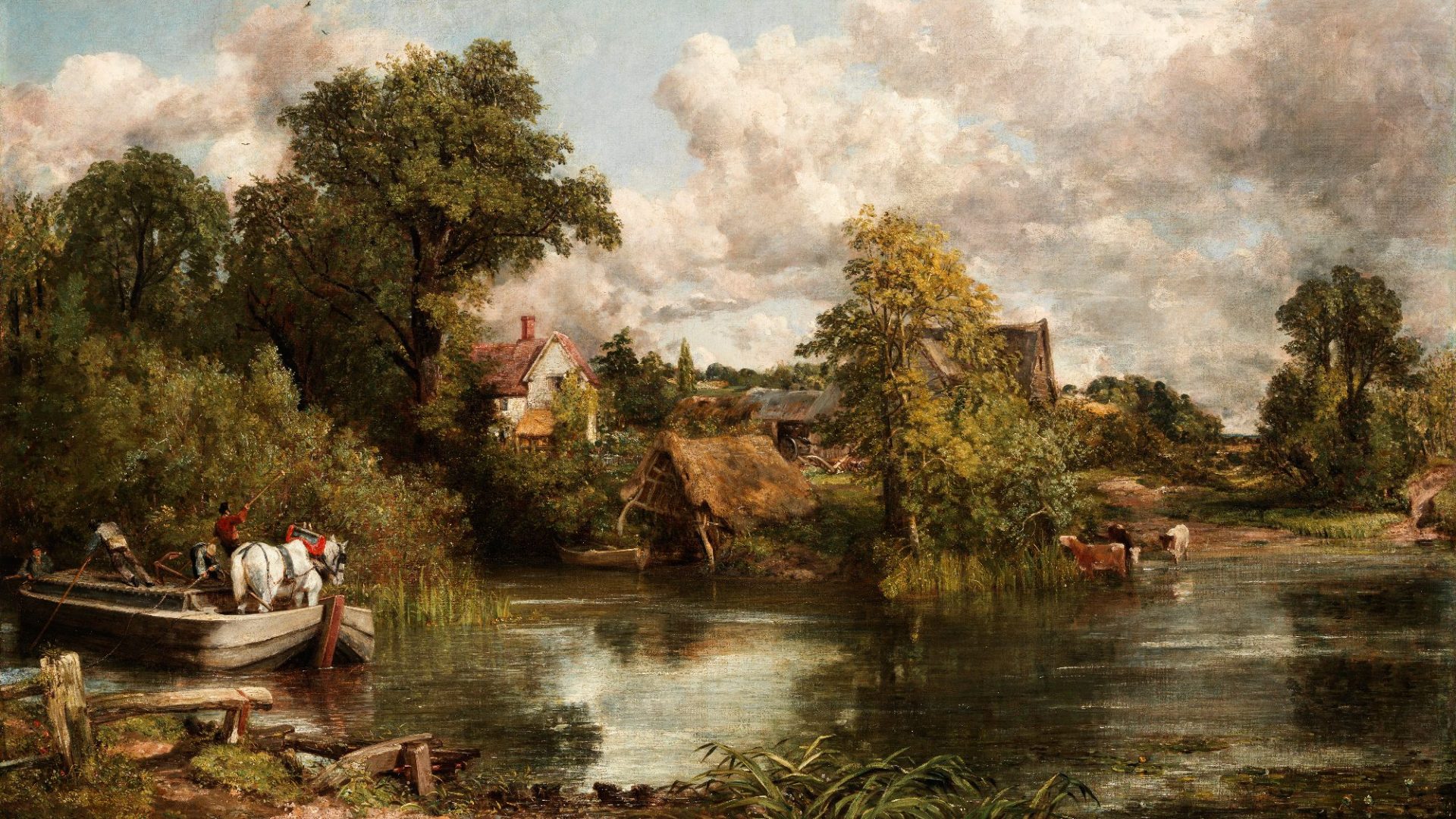
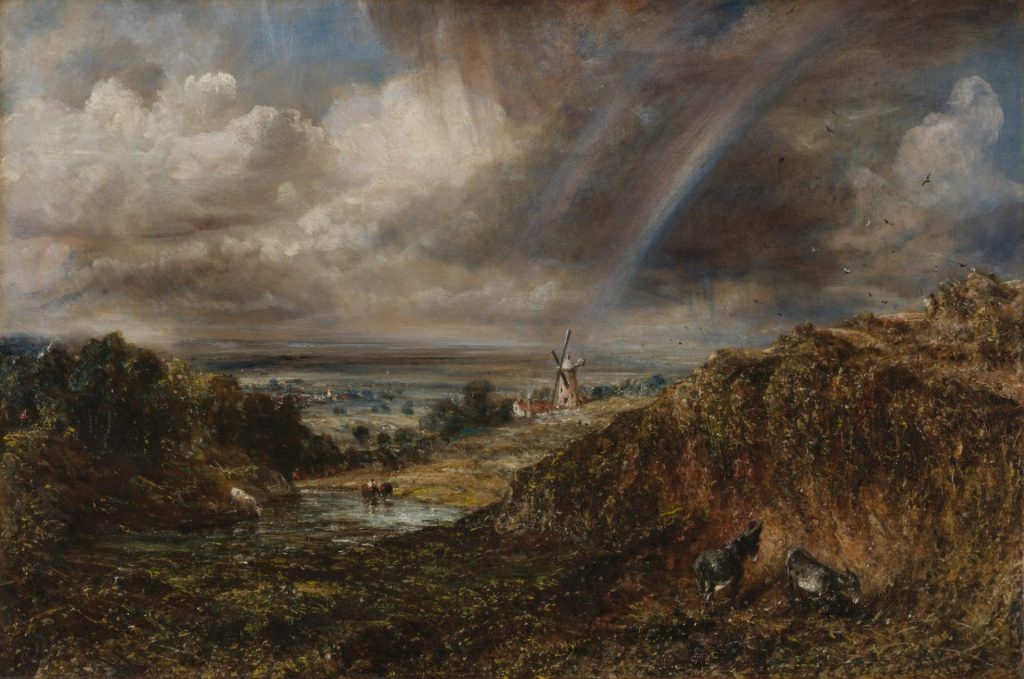
Cirrus. Altostratus. Stratocumulus. The artist John Constable could not only recognise the cloud types and understand their impact on the land that yielded the family wealth. He could also name them, thanks to the first classification of clouds, in 1802, by his contemporary, Luke Howard.
We know not only that Constable (1776-1837) was fascinated by the infinite visual possibilities of the sky, but that he studied Howard’s publication On the Modification of Clouds, in which the young Quaker set out for the first time a system on the lines of Linnean plant classification.
Until this landmark in meteorology, most clouds had attracted picturesque but unscientific names, some of which, such as “mackerel sky”, are still in daily usage. Using Latin terms, however, Howard described shape (cirrus/curl, cumulus/heap, stratus/flat, nimbus/rainy) and position (stratus/low, alto/medium), and when necessary bolted two together to give terms used to this day: altocumulus, cirrostratus, and the farmer’s frenemy, cumulonimbus – the bringer of rain, but also hail, thunder and lightning.
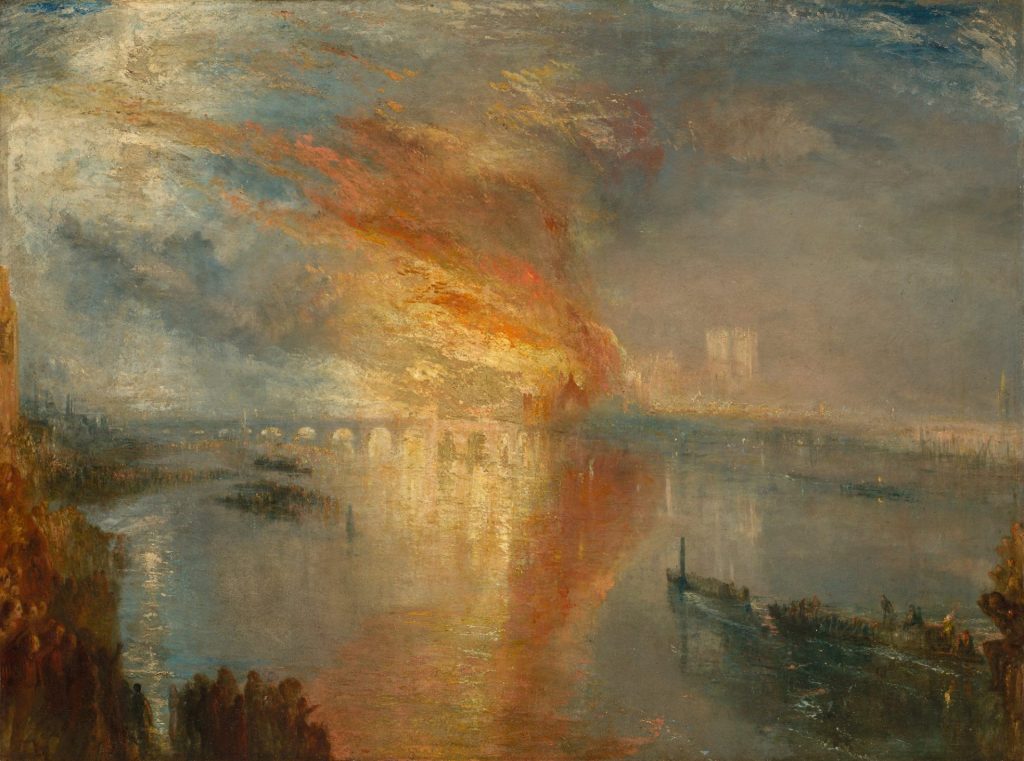
Another contemporary, Joseph Mallord William Turner, was equally transfixed by the heavens: the worse the weather, the better he liked it. He may (or may not) have murmured, “The sun is God” on his deathbed, and his luminous yellow discs certainly burn out of his canvases like a supernatural force. But when subjected to black clouds, lashing rain, destructive winds and rising waters, Turner was literally in his element.
An exhibition at Tate Britain in London enjoys to the full the coincidence of the two artists’ birth within 14 months of each other, so that their 250th anniversaries conveniently overlap. With rooms alternating between the two until a final paint-off, it is under fierce or threatening skies that the two very different artists most often find common ground.
The show’s title, Turner and Constable: Rivals and Originals, makes much of their parallel but diverging careers. The idea of opposites locked in both grudging admiration and aesthetic combat appeals to our competitive instinct, from Haydn and Mozart to Matisse and Picasso. There is no shortage of material in the side-by-side, far-apart stories of Turner, Constable and their work.
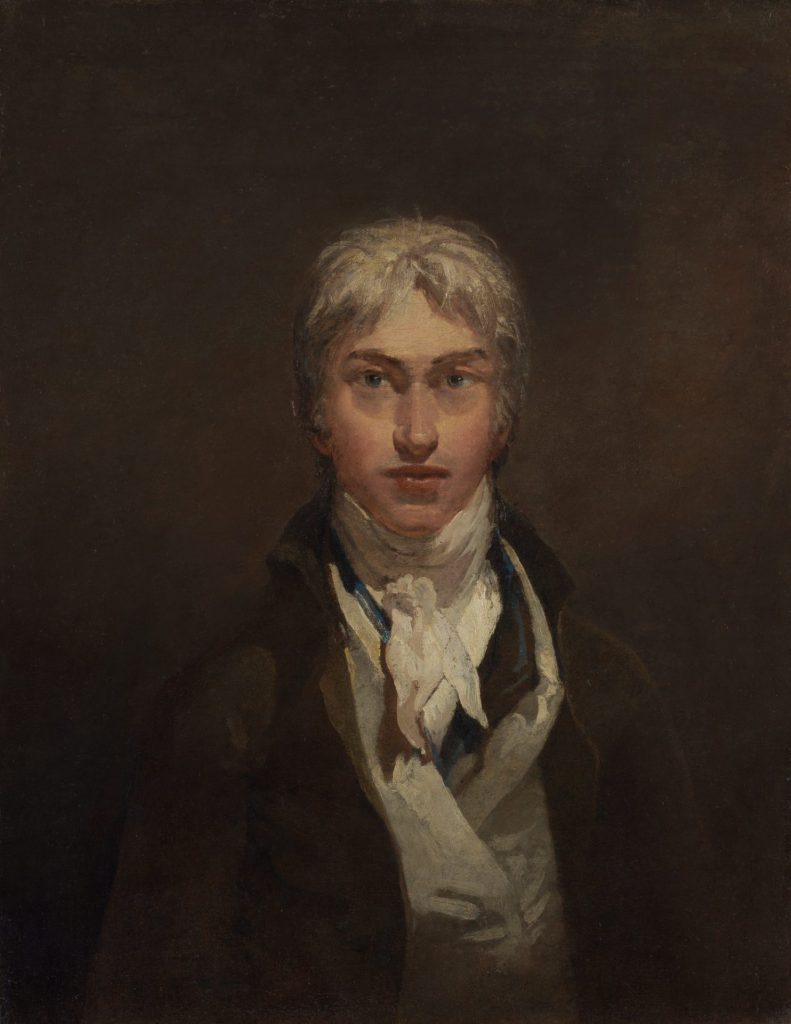
On the one hand, and born first, on April 23, 1775, there is Turner, the son of a barber and a troubled mother, living in the very heart of London, a prolific and prodigious artist from his early years. The touching self-portrait (pictured far right) at the age of 15 shows a youth with flowing locks, buttoned into a smart coat that he is outgrowing and with an intense gaze fixed on the distance.
On the other hand Constable, born on June 11, 1776, as heir to a lucrative Suffolk grain business, is embedded in the rolling countryside and its near horizons. Constable is pictured (far left) painted by Ramsay Richard Reinagle in 1799.
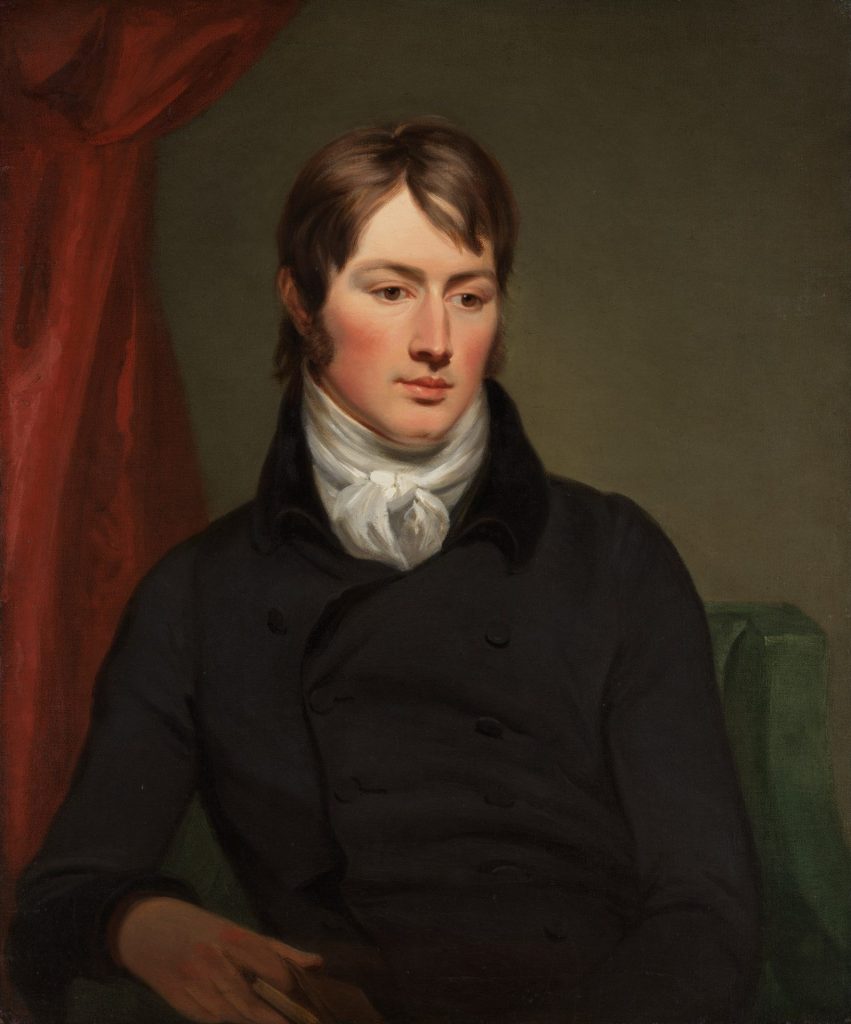
c. 1799
Restless, ambitious Turner, frustratingly grounded by the Napoleonic wars, travelled the length and breadth of his own land and cantered overseas at the earliest opportunity, when the Peace of Amiens in 1802 opened up a travel window. The journeys were arduous, and compromised by just the sort of wild weather that brought out the best in him.
Hazardous sea crossings furnished Turner with tumultuous material, and on two occasions what would have been an excruciatingly uncomfortable coach tipped over in the snow, forcing the passengers out into sub-zero temperatures.
Among the personal objects that resonate touchingly and revealingly throughout the exhibition is a sketch book opened at a page that is spotted by rain. Turner sketched constantly and at speed, wearing out his boots, probably barely pausing to sit. Constable, on the other hand, set himself up with a tiny wooden chair to take on painting campaigns in the English fields and lanes. It is on loan to the exhibition, its dainty front feet perched delicately on tiptoes.
While Constable was chatting to his mentor, the self-taught John Dunthorne, and enjoying the encouragement of collector Sir George Beaumont, brokered by his mother, Turner was busking his way around Europe. Touchingly, he jots down sometimes inaccurate phrases that will help him locate the art gallery, find the way or know how far to go: “Dove è l’Accademia di Belle Arti”, “Was is die weg”, “Wie weit ist es”.
But he did not visit Italy until he was 44, in 1819, returning in 1828. The long overdue revelation of that country’s climate, landscapes and architecture prompted an outpouring of huge, sun-soaked canvases.
Only Turner can render a sun and its rays so violently that they feel as destructive as a hurricane. In his second Italian campaign, he concentrated on Rome, and from there explored the idea of conflict between that city and Carthage in a series of big canvases.
Initially painted in Rome in 1828 but reworked in London in 1837, Regulus acts out with startling veracity the shocking torture of a Roman general, Marcus Atilius Regulus. During the first Punic war (264-241BC), the Roman was captured and his eyelids removed, or sewn open, according to various accounts. To recreate his unprotected exposure to the blinding sun, Turner floods the harbour with the unfiltered rays that will ultimately lead to his death.
Contemporary artist Charles West Cope painted Turner putting the finishing touches to Regulus for exhibition. He shows the master, short of stature, standing on a bench in front of curious onlookers, wearing a greatcoat and stovepipe hat, working from his palette.
Cope’s admiration is undisguised, but one critic of the time said of the explosion of shimmering light that “all is glare, turbulence and uneasiness”. This was not meant as a compliment. Turner is unlikely to have been wounded by this description of his painting’s impact.
The stocky artist inspired not only other, admiring painters but also cartoonists. In one sketch, his familiar tubby outline is shown wielding a floormop loaded with paint slopped from a bucket marked simply “Yellow”.
Chrome yellow, strontium yellow, Naples yellow, Indian yellow, derived from the urine of cows fed on mango leaves… If the sun was God to Turner, yellow was at least king. To follow its ascendency, viewers can compare his early impressions of ruined Norham Castle, on a bend in the river Tweed in Northumberland.
Turner first took Norham as his subject during the topographical forays up and down the country that yielded both income and an encyclopaedic knowledge of Britain and its changing light. When in 1822 he painted the watercolour Norham Castle, he showed the hulk and voids of the ruin in some detail, and resorted to a brush with a single squirrel hair, so minute was some detail.
By the time of Norham Castle, Sunrise (1845), the ghostly blue fortification has melted first into its rocky promontory and then into the water below. Sulphurous yellow burns from the dawn sky, floods the plain and illuminates a grazing cow whose legs are multiplied by the golden light striking sluggish water.
Such a prominent animal is uncommon in Turner, but empathically one of Constable’s comparatively few motifs. A countryman at heart and latterly reluctant Londoner, he understood about horses, carts, agricultural practices. The weather and the seasons to him were not simply cues to paint, but were bound up in the family fortune.
Meticulously detailed depictions of rural scenes compare strikingly with Turner’s increasingly personal interpretations of landscapes. But had he had Turner’s much longer career – the Suffolk farmer died in 1837 aged 60, the inner-city boy in 1851, at 76 – could Constable have laid down the foundations of impressionism, as Turner did? (The First Impressionist Exhibition was staged only 24 years after his death, in Paris.)
Turner’s longevity unquestionably gave him certain advantages, not least the arrival of portable tubes of ready-mixed paint, the critical breakthrough that released artists from the studio and into the great outdoors, not only for sketching but also for painting directly from nature, on site.
Both artists were masters of the alchemy that is putting paint on canvas, and much is made of the incident in which Turner’s final splash of red on varnishing day at the Royal Academy of Arts in 1832 enflames Constable, prompting the retort, “He has been here and fired a gun.”
The weapon in question, in this war of the artists, was a bobbing scarlet buoy, added to the otherwise cool-coloured view from the sea of the city of Utrecht, entitled Helvoetsluys.
Suggested Reading

The quiet genius of Fra Angelico
Nearby, Constable’s much laboured-over prospect of 1817’s new Waterloo Bridge, seen from Whitehall Stairs, for all its detail, was irrevocably upstaged. Sadly, Helvoetsluys is not in this show – they were reunited at a Royal Academy exhibition in 2019. But the clash is amusingly recalled in footage from Mike Leigh’s 2014 film Mr Turner, Timothy Spall stomping into action on varnishing day.
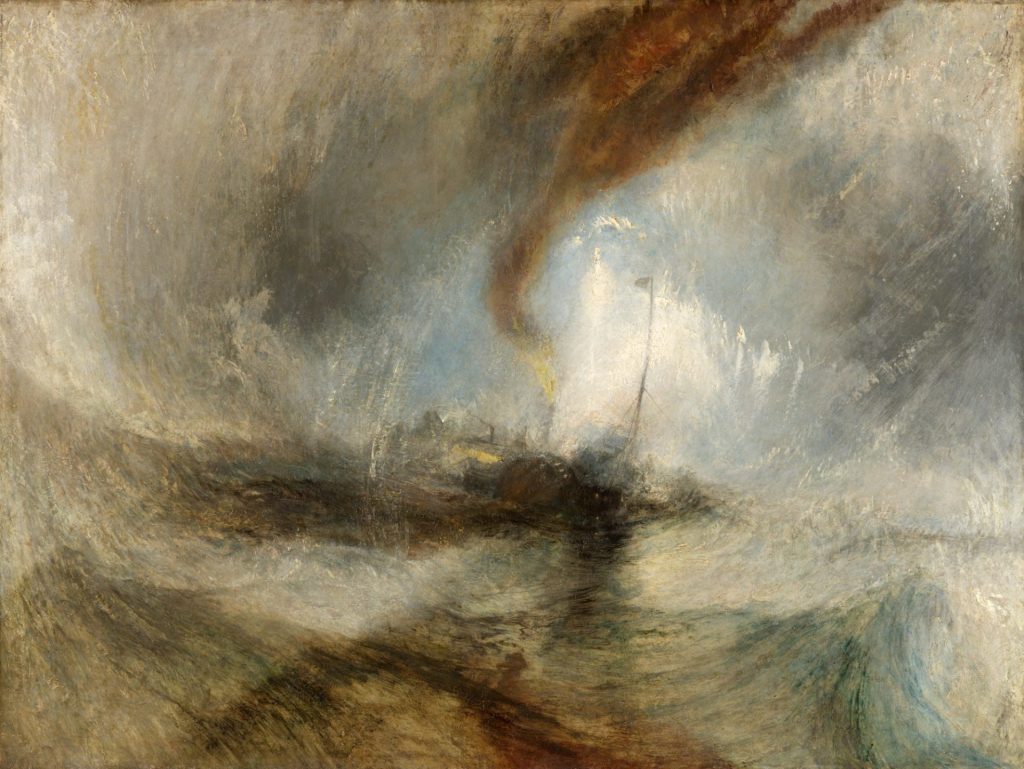
Eyes accustomed to the groundbreaking art of the past 100 years are probably more drawn to Turner’s expressive reactions to landscape than to Constable’s more conservative records. But the dramatic skies that excited the latter artist suggest that, had he lived to see it, he might, like modern visitors, have gasped not with horror but with admiration at Turner’s daring Snow Storm – Steam-Boat off a Harbour’s Mouth (1842).
Sea, sky and snow are whipped into a frenzy of black and grey. That’s cumulonimbus. And hurricane-force genius.
Turner and Constable: Rivals and Originals is at Tate Britain, London, until April 12, 2026