
Ludwig van Beethoven pops up all over his native Bonn, most commonly as a little mannequin, hands thrust into his pockets like a cocky schoolboy, youthful, and, often, painted gold. The former capital of West Germany is justly proud of its most famous son, exalting in his music, delighting in his family home in Bonngasse, an almost miraculous survivor in a city centre that was devastated by wartime bombing.
Among buildings destroyed on the worst night of that campaign, October 14, 1944, were the riverside concert hall and the hospital’s gynaecology unit. In the 1950s, in the spirit of national rebirth and in celebration of Germany’s better past, a new concert hall dedicated to Beethoven was created.
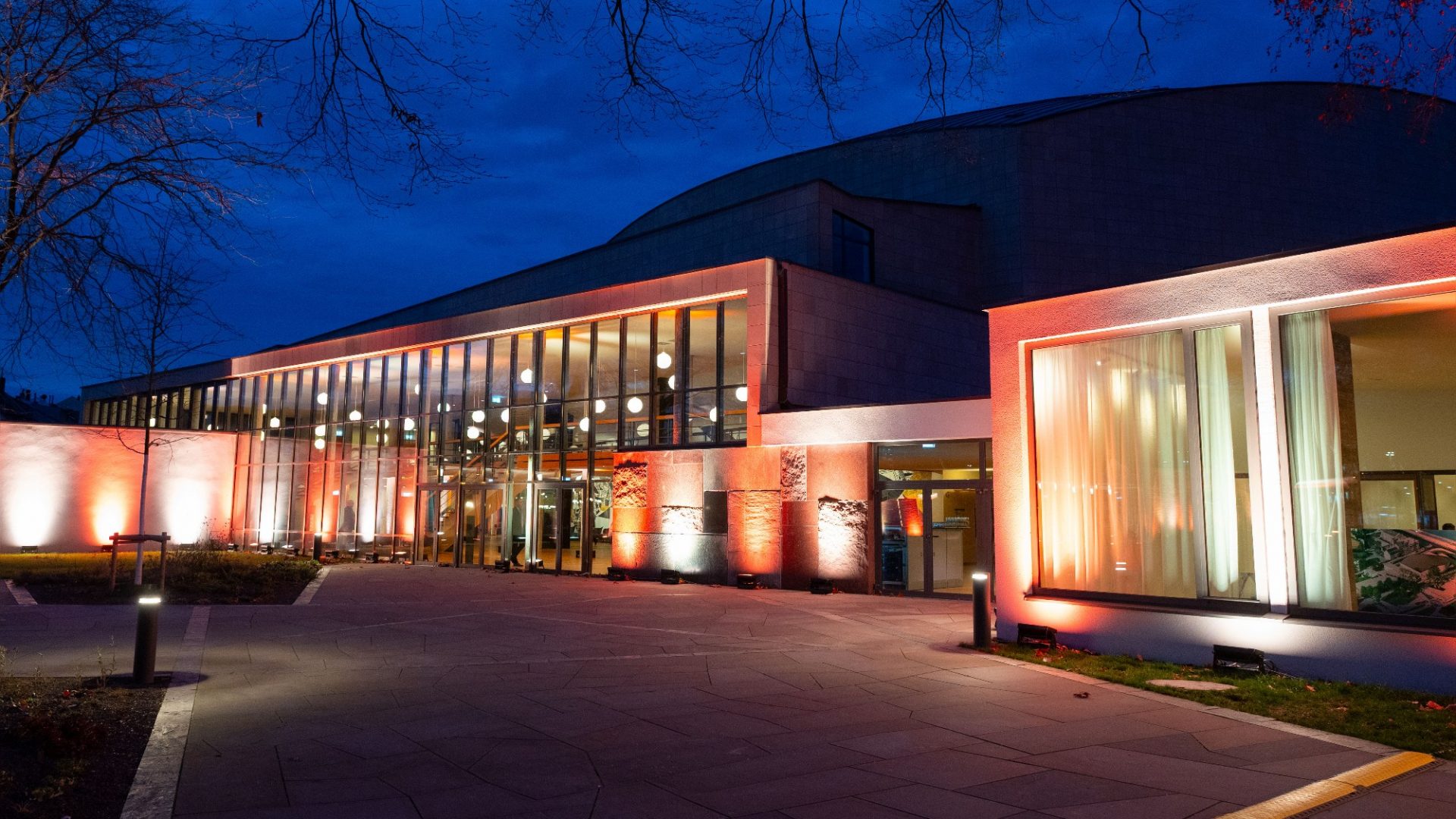
Now the Beethovenhalle, built on the site of those hospital wards, has been reopened, after a nine-year restoration. This reopening means a lot to Bonn, not least because the city coffers have stumped up €221m (around £190m), a sum that escalated over the years. It is stoutly defended by those who believe in the inestimable value to Bonn, and to Germany in general, of Beethoven and of the music that came before and after him.
The composer was adored in his lifetime and his reputation grew even further with his early death in 1827, at the age of 56. Franz Liszt was at the forefront of admirers who thought that what would have been Beethoven’s 75th birthday, in 1845, should be marked by the construction of a temporary concert hall in which to perform his work. That first Beethovenhalle was made of wood and dismantled a fortnight later, but the idea of a permanent concert hall was not so easily packed away.
The second version was built in 1870, on the west bank of the Rhine, serving three generations of music-makers and music lovers until 1944. Early on in the aftermath of the war, the third Beethovenhalle came to represent a Germany giving something back to the world in the internationally understood language of music, and with a design that would champion the modern art and design despised by the Nazis.
A competition held to choose the project’s architect attracted 109 draft plans. From the shortlist of 14 came a surprise winner – the 28-year-old unknown Siegfried Wolske, a pupil of the modernist Hans Scharoun.
Suggested Reading

Turner and Constable, forces of nature
Today’s newly restored Wolske design preserves meticulously the young visionary’s design, while invisibly building in modern tech. But those who visited before the renovation will observe some differences now, noticeably a return to the strong colours that had at some stage been overpainted with once fashionable whites and creams. Pleasingly for any staunch European, but entirely coincidentally, the dominant colours are blue and yellow.
Also fortuitous is the musical quotation on the foundation stone, marked by a bronze plaque, in which the first few notes of the final movement of the Ninth Symphony mark out the musical opening of Ode to Joy.
The plaque is one of eight works of art dotted through the building, every one with a strong, mid-century resonance. Wolske himself designed stained glass in the spacious entrance that incorporates stylised references to the building’s design, including the distinctive shallow dome that inspires some to refer to the whole as a giant oyster. In a reception room an eight-panelled wall painting, presciently praising the bee, and a massive frieze with Klimt-like gold leaf suggests, with its black dots and lines, sheet music, both by Joseph Frassbender.
A ceramic diptych immortalises Bonn’s seven hills and the Rhine while Beethoven is represented, not as a little golden man but in the imposing, giant sculpted head by Émile-Antoine Bourdelle with its lines “Moi, je suis Bacchus, qui presse pour les hommes le nectar délicieux.” (“I am Bacchus, who presses delicious nectar for Man.”)
It was part of Wolske’s vision to use materials from many countries, but in the rebuild that incorporates American rosewood and Japanese sen (ash) wood, it was the craftspeople too who brought together the nations of the world: 2,189 workers from 22 countries represented 375 companies.
Less diverse was the audience on opening night. And for all the dedicated craftsmanship, the interaction of the building with the public has thrown up teething troubles, most involving queues.
But the music, played on the first night by the Beethoven Orchestra Bonn and soloists including the city’s own pianist Fabian Müller, is what counts. The lightly enhanced acoustics of the main hall are almost as they would have been in 1959, with airy wooden walls over copper fabric that glows behind the musicians.
The exuberant Beethovenhalle is back, and the world is a slightly better place.
Claudia Pritchard writes about the visual arts, opera and classical music