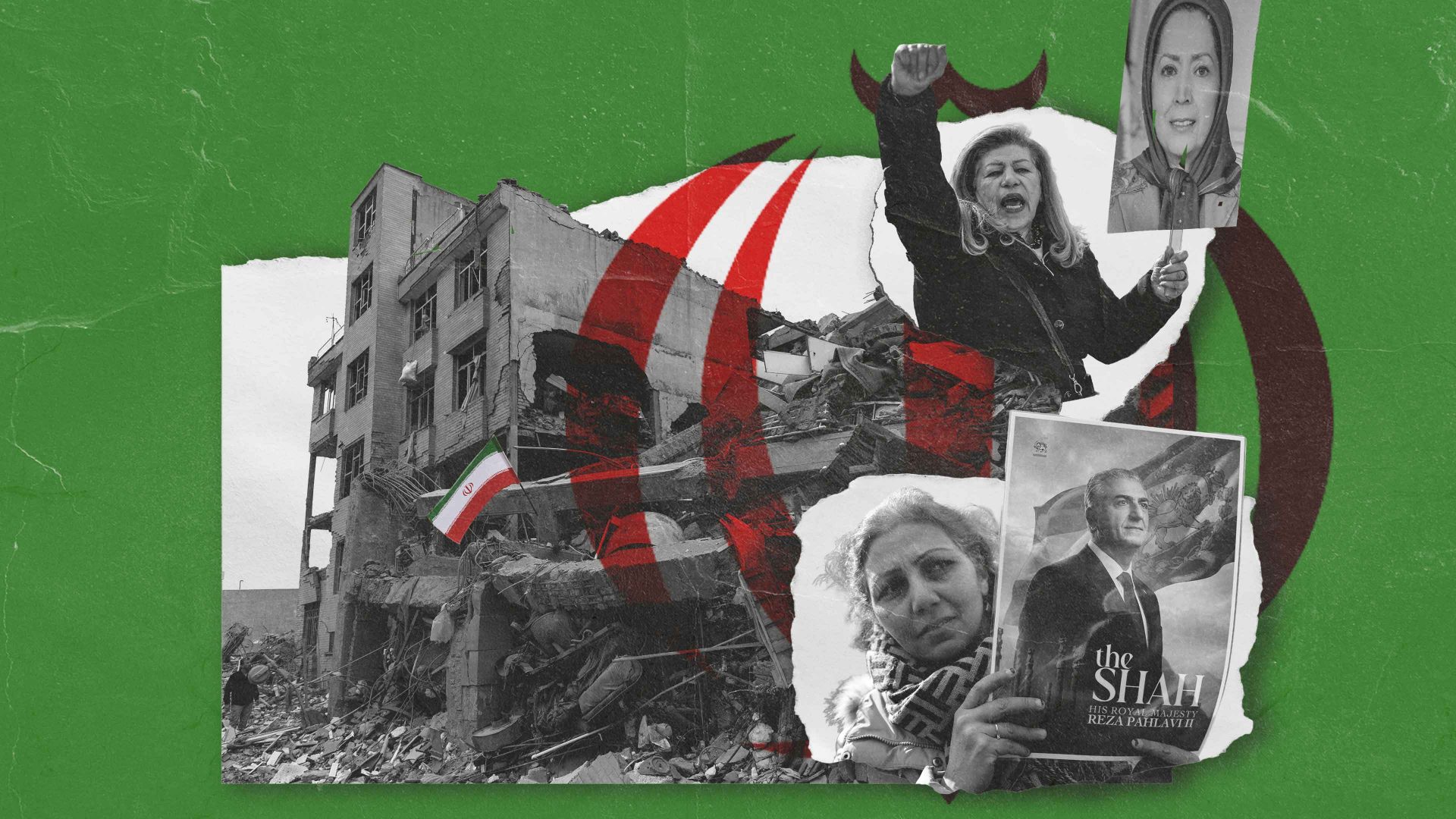
In the chaos and spin of the Iran war, an important question is not just whether any negotiations between Washington DC and Tehran are possible, but who the partners in any such talks might be. Donald Trump claims to be in discussions with “top people” in or adjacent to the Iranian regime, but few others on his team seem to be suggesting similar.
In the next few weeks, either the Iranian regime falls, or it doesn’t. If it stays, then possibly some diplomatic mediation like that proposed by Pakistan might “succeed” in the sense of bringing an end to hostilities. For ordinary Iranians, however, that would mean allowing the theocratic state to continue after some concessions to Israel and the USA. If it falls, then a different question arises: who represents the order that will replace the hard-line theocracy established by the Ayatollah Ruhollah Khomeini in 1979?
The White House still prefers option one. In the belief that Venezuela showed how easy it was for Trump to get rid of a ruler, install another and distribute the plunder among his friends and family, the hope is still for the same to happen in Iran if a suitably compliant puppet can be found. But even if neither the White House nor the Pentagon seems to be interested in listening to them, there is a large expert community outside Iran, essentially made up of Iranian exiles, with much to say about who should be in charge.
The organised dissident groups mostly propose some kind of transitional regime after the present government has fallen. All are a bit hazy about how exactly the regime is supposed to be overthrown, since several waves of mass protests and now intense bombing haven’t so far been able to do it, but even so, various scenarios are in play. Many of these look pretty good until you learn more about them.
For instance, there is the Mojahedin-e-Khalq or MEK. Led by Maryam Rajavi, it has a website where she writes passionately about women’s rights and the restoration of democracy, invoking the mass protests of the ‘Woman-Life-Freedom’ demonstrations of 2022 that brought a new generation out on to the streets.
Rajavi takes as her model the former prime minister, Mohamad Mossadegh, democratically elected but deposed by a joint CIA-MI6 operation in 1953 after trying to nationalise the oil industry. A fresh, rigged election was held, Mossadegh was placed under house arrest until his death, the Anglo-Persian Oil Company was re-named British Petroleum, and the benign monarchy of the Shah and his Pahlavi dynasty was transformed into a CIA-backed regime of political repression, torture and murder.
Mossadegh said at his trial in December 1953: “Yes, my sin—my greater sin and even my greatest sin is that I nationalised Iran’s oil industry and discarded the system of political and economic exploitation by the world’s greatest empire. This at the cost to myself, my family; and at the risk of losing my life, my honour, and my property.”
Democracy, women’s rights, a pro-western attitude… so what could go wrong for Rajavi? Marco Rubio, now US secretary of state, spoke at a high-profile MEK event in 2020 and in the past Rajavi has won the support of MAGAites like Rudy Giuliani and Matt Gaetz, as well as some now out of the inner circle, like former secretary of state Mike Pompeo and former national security adviser John Bolton.
But the MEK comes with problems. As the “Mojahedin” in the name makes clear, it was founded as an armed resistance group, opposed to the US-backed Shah, and after attacking not just Iranian government figures, but the US troops installed to protect the regime. It was designated as a foreign terrorist organisation by the US State Department until 2012.
After supporting the 1979 revolution, it then turned against the Ayatollahs, who responded by executing and imprisoning tens of thousands of MEK supporters. The leadership fled to Iraq, and this created an even bigger problem: they took Saddam Hussein’s side in the Iran-Iraq war.
This conflict has iconic status in the mythology of the theocratic regime, constantly replayed on TV and invoked daily in schools as proof of the indomitable will of the heroic Iranian people against foreign enemies. Memories of this long and brutal war mean that the MEK, in spite of still having thousands of its members imprisoned, is toxic to many Iranians.
In addition, the hero status of Mossadegh, long the essential poster boy for Iranian democracy, seems to have dried up among the largely young protestors who have been sporadically trying to express their displeasure. Professor Ali Ansari, of St Andrew’s University and Chatham House, the leading expert on modern Iranian history, told me: “It reflects a shift over the last five years towards Pahlavi nostalgia. My sense these days is that most young people look towards some form of constitutional monarchy or secular republic, the latter I think being more likely in the circumstances.”
Since the Ayatollahs have been in power for 47 years, this means that the younger generation are “nostalgic” about a regime they never knew. Which leads us naturally to the main royal contender, Reza Pahlavi, the crown prince and son of the last Shah. He is also seeking Trump-adjacent support, speaking at the CPAC conference on March 28, and supported by many people in America’s Persian diaspora, with influential organisations lining up behind him.
It is not clear exactly what people expect of him. At CPAC, MAGA-friendly Iranian-Americans were chanting “Long live the king”, even though he himself has been quite explicit about not seeking the crown. He will, he says, just be the figurehead of a transitional government.
But he has lived his whole adult life abroad, and although he does have some support inside Iran, he also excites violent opposition, both as a member of the dynasty that brought them the notorious SAVAK secret police, and according to the government and its backers, as a puppet of Israel and the USA. However, Tehran takes Pahlavi seriously enough to have announced a wave of pre-emptive arrests of 111 “monarchists” in 26 provinces since the beginning of the war.
Dr Mehrdad Khonsari, a former Iranian diplomat and veteran opposition activist, now a senior consultant at the Iranian Centre for Policy Studies, told me: “There are two problems with Reza Pahlavi.
“He and his followers have published a blueprint for transition in which there will be a transitional government with him solely at the top, appointing people and making decisions. This is something along the line of what was experienced with Khomeini when he arrived in Iran, and we saw how that turned out.
“A second problem is the whole idea that the United States should decide to install anyone as leader in the event of regime change, bearing in mind the resentment that was felt in the aftermath of what transpired back in 1953.
“Looking at the situation from the outside, it might appear that Pahlavi is the only visible opposition figure, but there are a whole host of others in Iran. These people and several others are all in the game for filling any upcoming potential vacuum.”
Names Khonsari thinks could emerge include former president Hassan Rouhani, the current president Masoud Pezeshkian – both of whom are in their 70s and even the 84-year-old former prime minister Mir Hossein Moussavi, who has been under house arrest for the past 15 years. There is also the current speaker of parliament Mohammad-Bagher Ghalibaf, a relatively young 64.
Professor Ansari is not optimistic about a new leader rising out of the chaos as a consensus choice. He thinks there will be a civil war.
“It would always have been a difficult transition, irrespective of the war which in many ways has accelerated the decline in Iran. Remember, the country and system did not go into this in good shape. It was an economic basket case beforehand and will continue to be.
“Matters will certainly get worse before they get better but chaos and civil war will not I think last long. The military and others will move to stabilise things before things get too out of hand. That is my sense.”
For now, a vacuum is being created with high explosives, and Iranian state TV is promoting Operation True Promise with just as much enthusiasm as Fox can raise for Epic Fury or the Israelis for Roaring Lion. Public enthusiasm for foreign invasion is low. Flying in new people from the diaspora doesn’t look credible. The idea that there is some friendly “top person” who just needs a bit more bombing to be convinced to let Trump take over the country in person is equally unlikely to work.
Suggested Reading
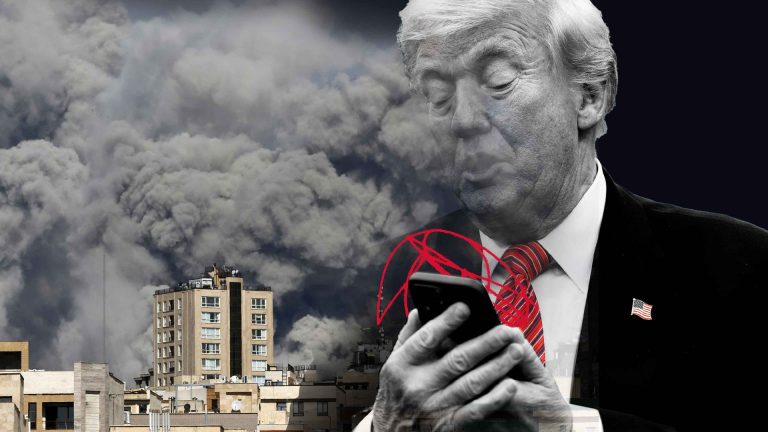

To Trump, Iran isn’t war – it’s showbiz
It is extremely difficult, impossible in fact, to find out how “the Iranian people” feel about this. They don’t know themselves, as with the internet shut down and no free public debate, all they have to go on is word of mouth. This feeds the politics of rumour that is so powerful but so unpredictable throughout the Muslim world.
Many in the West turn to the multiple internet channels devoted to Iranian opposition politics, but they can be a depressing phenomenon. Most people hide behind pseudonyms, and while you can understand why they might want to do this, it makes it impossible to distinguish real opinions from disinformation. Russian troll farming is suspected of playing a prominent role.
There is another big problem. The many online discussion channels devoted to Iranian politics each come to identify with one particular position, without real debate.
For instance, on Reddit, r/Iranian is anti-war, with posts showing bombing of civilian areas and sarcastic messages about liberation with bombs. But r/PERSIAN is pro-Trump and if not exactly pro-war, at least agnostic about it. So much so that a link to the now famous New York Times report demonstrating that the Shajareh Tayyebeh Elementary School had been struck by an American Tomahawk cruise missile, killing more than 170 people, mostly little girls, was removed without explanation by the r/PERSIAN mods, while Hegseth-style posturing is left in.
An internet channel called the Iran Politics Club or IPC claims to be “the largest Iranian website network online”, and promotes a very peculiar half-monarchist and half-Trumpy line. It praises Reza Shah Pahlavi, who ran the country from 1925 to 1941 before being deposed by allied forces as “Shah Reza the Great, father of the nation”, while simultaneously denouncing his grandson and near-namesake Reza Pahlavi as a Zionist/CIA puppet, weakling and traitor.
The leading light of the channel seems to be someone writing under the handle Ahreeman X, who writes: “Monarchists, Islamists, Parliamentarians or Dictators will not dictate anything to the Iranian people. A perfect model is the USA model. A Nationalist Leader elected by the masses will run the system and the country.”
In case there is any doubt about what he means, his thread Ideal Future Government for Iran declares this to be “the Golden Glory of National Populism established by MAGA – the latest and most logically updated and upgraded system of government in the globe, where the president runs the nation as the sole authority.” Russian trolling? More Trumpy lunacy? Who knows.
Perhaps the simplest and most convincing political message on the message boards is one in all caps: “THE MAJORITY OF IRANIANS ARE UNDER 35. WE ARE SICK OF THE MULLAHS AND ISLAM.”
Despite the kaleidoscopic nature of opposition messaging, it is hard to avoid the fact that the Iranian population in general has had enough. The main driver of revolt is not any particular political position – it is economic collapse, and a visible sign of this is the fact that Iran is running out of water.
The historic capital of Isfahan, in central Iran, is built on a major river, the Zayandeh, and it has run completely dry. This slow-motion catastrophe is not entirely the fault of the Ayatollahs.
The Shah instituted a programme of industrial development in central Iran, and steel-making needs a lot of water. This was followed up by the Islamic Republic’s scheme to grow watermelons and other fruit for export, again needing large amounts of fresh water.
All this came from the great river, and over the years, large-scale public works projects, including dams, pumping stations and pipelines, were supposed to resolve the resulting shortages: but they didn’t work. Isfahan is slowly breaking up and sinking into the desert as the water table sinks away, and chronic drought makes agriculture impossible.
Now it is the turn of Tehran. People can get used to power cuts and blackouts. Once the taps stop working, everyone can tell things are getting serious. Add general economic collapse to this situation, and this time the mass uprising is not about hijabs or arrests or any specific human rights issue, but simply demanding the fall of the government. How can that work?
Iran is not what many people think. Far from being a country of ignorant religious fanatics, Iranians are highly educated and less religious than Americans, as measured by weekly mosque attendance in Iran (15%) versus church attendance in the USA (30%). Knowledgeable about the rest of the world and computer-literate, urban professionals are largely pro-American, and when they can they send their children to American universities.
If the White House or the Pentagon really knew what they were doing, the USA could quite plausibly set up as the friend of the Iranian people. Joining the Israelis in bombing their infrastructure and economy and threatening to destroy their electricity supply and drinking water is not likely to win any fresh support. As Pete Hegseth talks about God guiding American bullets, Iranian state media replays every insult and threat, instantly spreading throughout the huge country.
The way out of this mess must, to an extent, involve the religious scholars who are, as in other Muslim nations, Khonsari believes reformist elements in the religious establishment would have a part to play in any transitional regime.
“There are maybe 11 Grand Ayatollahs or ‘Marjas’ at present,” he explains. “Seven of them are aligned with the state, and nobody trusts them. But four of them, espousing traditionalist views, are more or less independent, and then there are some outside Iran.”
Again, Prof. Ansari is pessimistic. “There are theological differences but many of the dissenting ayatollahs have either died or been suppressed,” he says. “I don’t think the clergy will play a significant role going forward. If there is a new regime, many will retire into traditional quietism.”
But he acknowledges the importance of the religious dimension. “The ideal route out of this mess, of course, is for someone within the religious establishment and current leadership – a more moderate figure such as Rouhani taking the helm and negotiating a genuine and durable peace. This cannot be done with the IRGC (Iran’s revolutionary guard) in charge.”
For now, power remains concentrated in the hands of a small number of dedicated hard-line clerics, and their position is so well-cemented that removing them without sparking a civil war among the various competing factions – if that is indeed possible – requires care and cool heads. Political opposition has been stamped out so effectively as to be almost non-existent.
But a soft challenge to their religious authority, with reformist clerics, their students, and the mass of the faithful recognising that there is more to life in the 21st century than medieval theocracy, perhaps offers the most civilised way forward for Iran.
The ideal solution would be for a young leader to arise, represent the new generation that is the real driving force of dissent against a failed state. But as the bombs continue to fall, no such figure seems to exist.
Christopher Lord is European correspondent for Truthdig in Los Angeles. His work has appeared in the New Statesman, Prospect, the New Republic (USA) and Der Spiegel (Germany)
 Most popular
The race to save the Beatles

How Jon Stewart told me the brutal truth about Trump and Hegseth


Matt Goodwin’s road to derision
Yes, it's a genocide