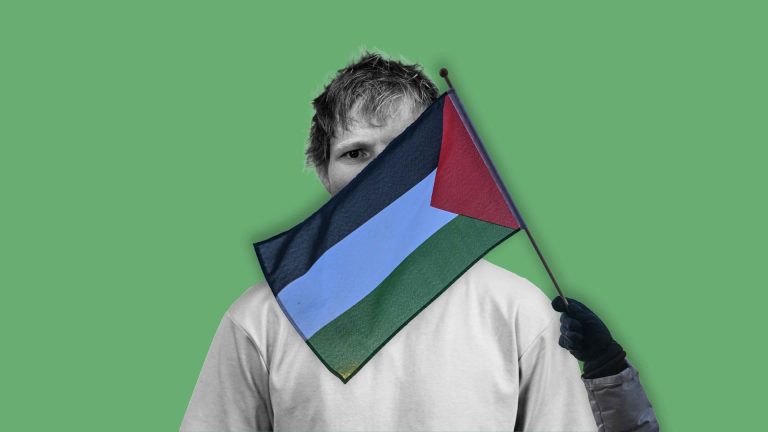
As many of us have, I’ve been following the news of Macklemore being dropped from Ed Sheeran’s tour because of his vocally pro-Palestine stance. Britain’s culture secretary Lisa Nandy weighed into the debate by saying that artists have a “right” to speak out about politics, with which I completely agree.
To be clear, I think it is egregious that Macklemore has been removed for speaking out about genocide, and that rich people such as Robert Kraft wield their power for censorship. But what I have been wondering more is if artists have a responsibility to speak out, and if so, how useful that is.
When someone becomes a public figure, they have a public platform – does that mean they then have a responsibility to the public to use it for the public good? Or should that be left to people more informed on certain topics, or more skilled at speaking on them?
To me, the best art combines a moral message with aesthetic value, something Tolstoy also felt when he argued that good art must have a Christian base. We disagree on the religious aspect, but we both feel an underlying morality is important.
Of course, I wouldn’t be the lover of Oscar Wilde that I am if I didn’t also believe in “art for art’s sake”, and that art and artists can just be that, without owing anything further to society. I also understand the Indian singer Diljit Dosanjh who recently said: “I’m an artist, not a politician,” when asked about student protests.
The American actress Jennifer Lawrence has spoken about how she has stepped back from commenting on politics “as we’ve learned election after election, [that] celebrities do not make any difference whatsoever on who people vote for,” something demonstrated in Kamala Harris’s inability to win an election, despite her many celebrity endorsements.
I’ve always felt that a celebrity’s view on something won’t make you change your own view. It’ll just make you like or dislike them more, depending on whether it coincides with your own view.
That’s not to say that celebrities can’t bring about change through exposing you to something, or being representatives of something or harnessing attention and connections for something. Magic Johnson did all of these in regards to HIV advocacy, and the British singer Jesy Nelson is doing the same today for spinal muscular atrophy, already having successfully campaigned for the disorder to be added to the heel prick test for UK newborns.
In the wake of Dolly Parton’s death, much was said and written about how she was able to unite a mostly divided country, and that was partly attributed to her ability to avoid being drawn into overtly political discussions. The Today, Explained podcast did an entire episode on how she was able to exert more influence by refusing to commit to anyone or alienate anyone through that, instead embracing particular “social causes” rather than parties or people. That is probably true, but she did still stand for something and invested significant amounts of money in the things she cared about.
Even so, I do think adding an uninformed two cents’ worth to a discussion can be worse than not saying anything at all, and that the pressure to comment on everything can create either disingenuous comments or empty virtue signalling.
The Danish influencer, Amalie Have, reflected on this phenomenon in a long Instagram statement in 2021 when she said, among other things, that activism has been used as a vehicle for people to build clout and feed their narcissism.
Suggested Reading
Wait – are you using the tactics of a sex worker?
The American comedian Caleb Hearon also responded to this when he issued a statement satirising many celebrities’ pretence at caring about issues: “Hey guys I’ve seen all the atrocities going on and I just want you to know I am keeping the conversation OPEN by saying NOTHING. I am a role model (product) and it’s important that I don’t disappoint my young fans (investors and shareholders) by being political. My shows are so much bigger than people – they are commerce.”
I don’t think artists and celebrities owe us, or that we should expect perfect behaviour from them, simply because they are public figures. I also don’t think they should automatically be perceived as role models, or be expected to act as such. I do like American actress Laverne Cox’s use of a “possibility model” though, and I think that often a celebrity speaking up about something isn’t to change people’s minds but to show that we all are able to speak up about what we believe in, even if it costs us.
Artists don’t have a responsibility to speak on issues because they’re artists, but because we all carry that responsibility as members of a collective community. They should speak out because of what kind of person they want to be, not because their voice may be heard louder than the rest of us.