I remember the age of Taiwanese post-rock, back when the dominant sounds of the day were soft, brooding melodies. Perhaps it reflected the ennui of the times.
That changed suddenly in the mid-2010s. I suspect it was due to the impact of the 2014 Sunflower Movement. That was the month-long occupation of the Taiwanese legislature in protest against a trade agreement with China, and it rocked society. The view that young people were nothing but a soft “Strawberry Generation” shifted overnight. It suddenly became clear that young people were willing to take risks for what they believed in.
Suddenly the sounds of Taiwanese indie music shifted. Angry, masculine rock was now in, and being played by bands such as Fire EX, Sorry Youth, and No Party for Cao Dong. These were the sounds of revolt. Fire EX provided the theme tune of the Sunflower Movement: a stomping, stadium-rock anthem called Island’s Sunrise. Sorry Youth frequently played at protests.
During my youth activist days I was a student participant in the Sunflower Movement, and I probably heard them play a dozen times at demos. And No Party for Cao Dong’s lyrics resonated with young people who lacked the opportunities their boomer parents had.
There was also a sense of anger towards elders, who were seen as having sold off their children’s future via the trade agreement that sparked the whole Sunflower Movement. I haven’t ever managed to see Cao Dong live. The tickets are always sold out.
Fast forward a few years, and that anger dimmed somewhat. Young people seemed to have won in the years after the Sunflower Movement, with the election victory of Tsai Ing-wen and the Democratic DPP, and the defeat of the pro-China KMT, whose policies sparked the movement.
Suggested Reading

Hello, I’m Taiwanese. Give me all your money
The turn, then, was towards the question of identity. And so one saw the emergence of new artists whose aesthetic mined Taiwan’s recent and distant past for inspiration. Rapper DJ Didilong, for example, drew heavily on the Taiwanese New Wave cinema, especially in the style of his music videos. Sunset Rollercoaster drew on the cultural memory of the 90s, particularly the era of iconic Taiwanese television dramas such as Meteor Garden.
And artists were pushing new boundaries in terms of form. Indigenous artists such as the singer-songwriter ABAO or hip-hop group Boxing showed that indigenous music was no longer confined to folk song or positioned as world music. A new generation of female rappers such as Yang Shu-ya and Cheng Hsien-ching were breaking fresh ground in a genre historically dominated by men.
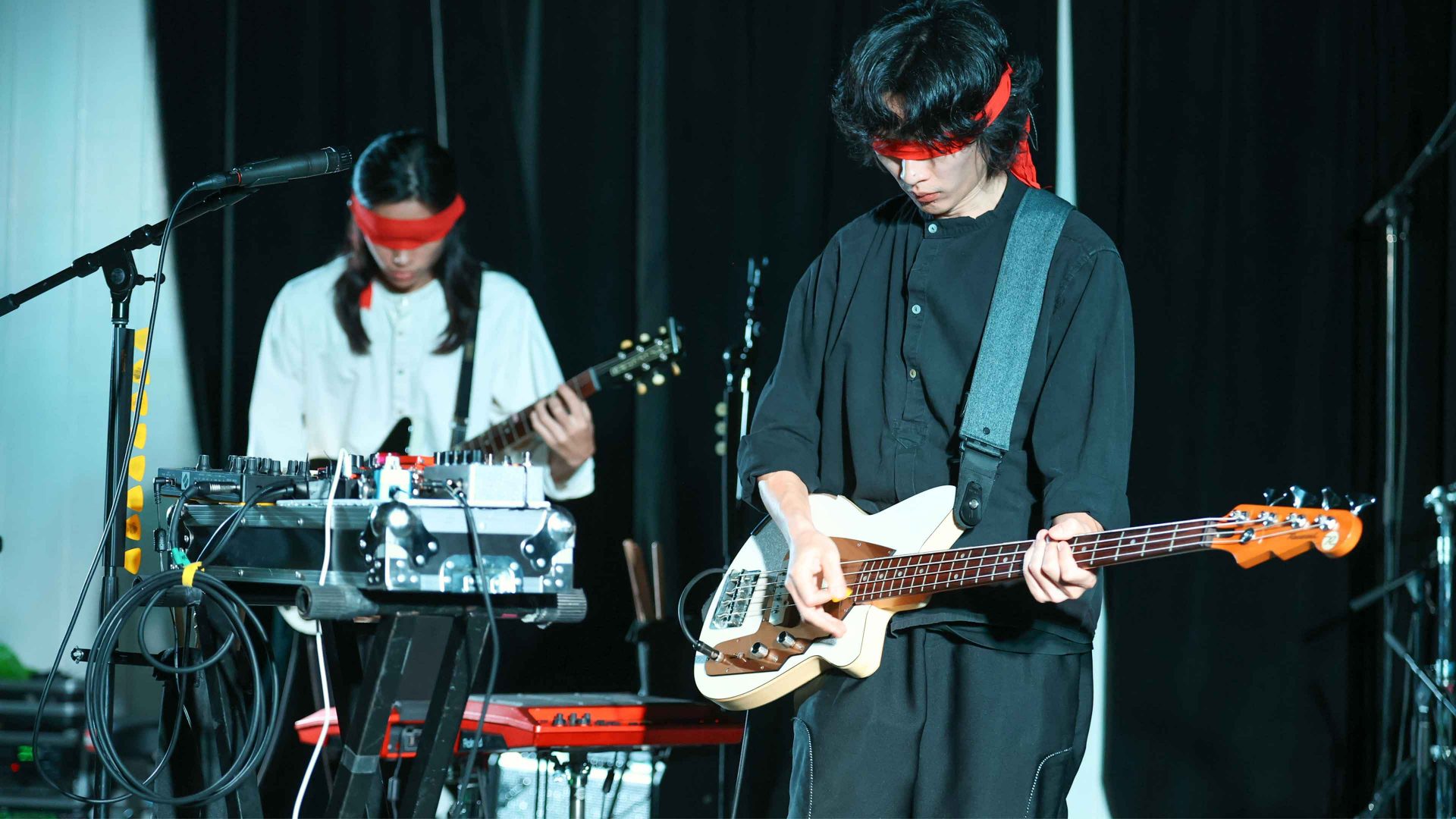
But the other week, I saw a favourite band of mine – a psychedelic ambient outfit called Mong Tong – play for the first time in a long while. I actually knew the two band members well before the band blew up in popularity, and I had even organised shows with them before. I was surprised, and pleased, to see that they had moved to a new level.
Apart from showing new influences from Thailand – a traditional Thai instrument called the phin featured heavily – the show was a very visual spectacle, with CGI-animated music videos by Xtrux. The show had been organised along with Taiwan’s Open Culture Foundation, the civil society organisation associated with civic hacker collective g0v, with Mong Tong’s music released under a Creative Commons licence for open use. They could be on the level of Kraftwerk one day, I thought to myself.
These days, it seems that Taiwanese music’s horizons are increasingly international. Mong Tong, for example, has taken what struck me in the past as a distinctively Taiwanese vibe derived from the shlocky bootleg era that we grew up with, then merged it with new influences from South-East Asia at a time when Taiwan is seeking to cement ties with South-East Asian neighbours.
And this reflects identity, too. What struck me most about the show was how it was traditional, using heritage instruments, but also backed by futuristic technology. That seems like Taiwan now, as today’s Taiwanese young people seek to synthesise both tradition and modernity in a search for identity that sometimes takes place through explorations of the past.
Brian Hioe is a DJ from Taipei and one of the founders of New Bloom Magazine