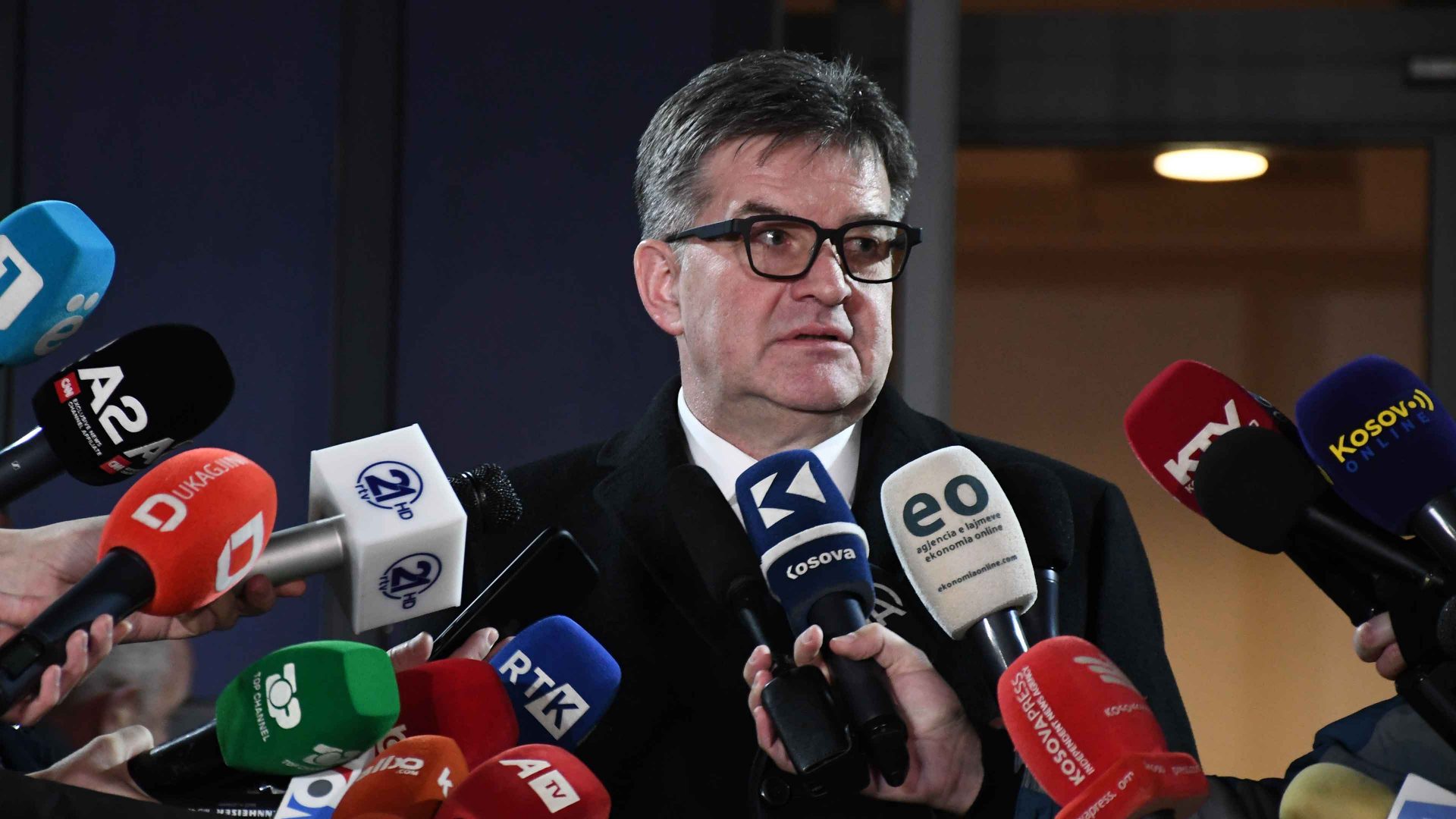
Slovak politics is dealing with its first unexpected dose of the Epstein scandal. Among the documents released in the US in relation to the notorious paedophile, rapist and sex trafficker, one name stood out: Miroslav Lajčák, a former foreign affairs minister, close ally and current adviser to the prime minister, Robert Fico.
The Slovak daily Denník N has reported that Lajčák’s name appears in the first batch of Epstein files at least 60 times. The documents suggest extensive correspondence between Epstein and Lajčák, whom the convicted paedophile referred to as a “friend” and by the shortened Slovakian nickname “Miro”.
According to Denník N, Lajčák probably offered Epstein a meeting in March 2019 at the ambassador’s residence in Vienna. Meanwhile, independent video news outlet 360tka uncovered an email in which Epstein wrote: “Miro is coming to Palm Beach… to strategise” – a reference to one of Epstein’s residences.
Notably, Lajčák even used his official government email for communication with Epstein. There is, however, no evidence that he actually visited Epstein’s residence or was aware of Epstein’s criminal activities. The financier’s first conviction in Florida was in 2008.
A week after the revelations, Lajčák remained defiant, with no mention of him stepping down from his advisory role. Fico has said he will decide on his future. But Andrej Danko, leader of the nationalist junior coalition partner, has called for ties to be severed with the former top diplomat.
In his defence, Lajčák insists he communicated with Epstein “only socially within his diplomatic responsibilities”. In his only statement, made to the state-run news agency TASR, he added: “The reopening of Epstein’s case happened after I left New York, and the full extent of his inexcusable actions, which I strongly condemn, only came to light after his arrest.”
Between 2017 and 2018, Lajčák served in New York as president of the UN general assembly, and in 2019 he chaired the Organization for Security and Cooperation in Europe. The conversations with Epstein took place between 2017 and 2019.
“Jeffrey Epstein was certainly not a blank slate. On the contrary, metaphorically speaking, he was thoroughly scribbled over,” said Miroslav Wlachovský, the former Slovakian foreign minister, when I spoke to him recently. “Miroslav Lajčák is a talented, capable, and experienced Slovak diplomat, which is why I am struck by the tone of the communication, the degree of familiarity, and the lack of caution.”
“The stigma of communicating with someone like Jeffrey Epstein represents an enormous burden,” he added.
Epstein was strikingly interested in Slovak and European politics. According to email exchanges between Steve Bannon, Epstein and others, Bannon was plotting to export the US far right revolution to Europe, with Lajčák mentioned in their conversations as a potential spearhead. “Miro is exactly the type of guy that will take this entire movement to the next level,” one unidentified sender wrote. Epstein replied: “Miro… will lead the EU project, if you like him.”
Suggested Reading

The Epstein enablers who looked away
Rastislav Káčer, another Slovakian former minister of foreign affairs, said: “Bannon, being the ideologue and frontman of American neo-fascism, toured Europe organising and financially supporting the creation of nationalist and extremist movements across the continent. It is evident that he sought to involve Lajčák in these plans.
“The communication clearly points to the existence of a confidential far right network in the US that aimed to influence political developments in Europe,” he added. “The fact that it implemented and continues to implement this plan is highly visible. This is an uncomfortable situation for Fico.”
In one exchange, Epstein wrote of Lajčák: “He suggested you might like his former prime minister, Fico.” In a separate email, Epstein wrote about the collapse of Fico’s previous government following the murder of the journalist Ján Kuciak and his fiancée, and the subsequent mass protests: “His government will fall this week – as planned.”
After the first batch of Epstein files was released, Fico called for the journalist’s killing to be re-investigated. The case is still being decided in court.
“He is merely provoking, deliberately lying, and covering up his own political failures. He is dancing on the graves of dead young people,” said Peter Bárdy, editor-in-chief of Aktuality.sk, for which Kuciak worked before his murder.
Amid plummeting poll numbers and mounting pressure from the progressive opposition, the last thing Fico’s government needed was the Epstein files implicating his close ally. But with a string of controversies already engulfing the government, the Epstein revelations add yet more pressure – and Fico and his allies are running out of ways to divert public attention.
Branislav Ondrášik reports for the Slovak daily SME