Both the ambitious dynamism of Saudi Arabia’s Vision 2030 and the wave of repression unleashed by Crown Prince Muhammed bin Salman come from the same source: a realisation that Saudi Arabia is running out of time.
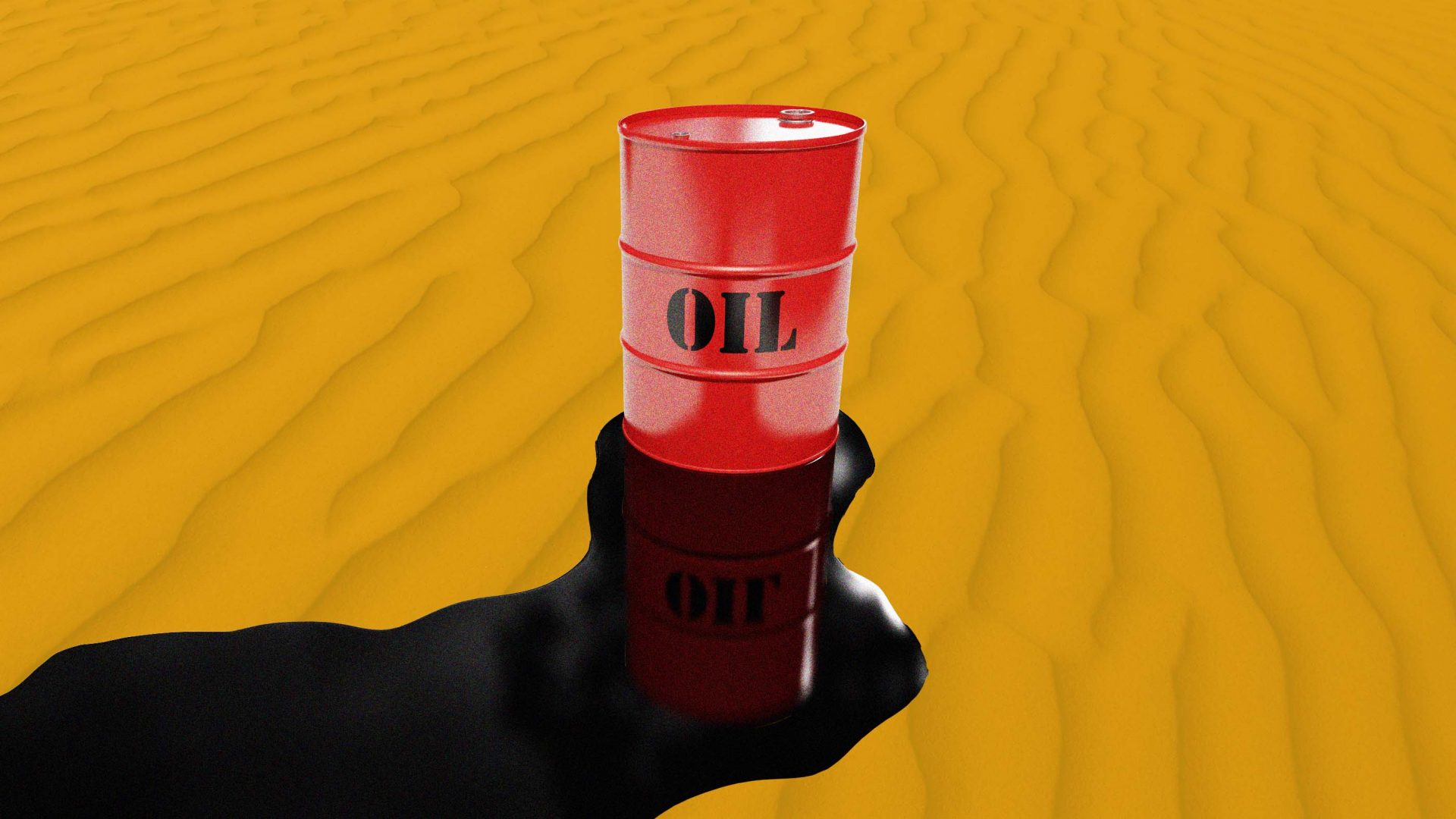
A 2011 report by Chatham House pointed out that Saudi’s domestic consumption of its own energy was gaining rapidly, while its production remained largely static. This trend has continued into the 2020s but the climate crisis makes it even more urgent: the need for domestic energy for cooling and desalination continues to rise, while the long-term demand for Saudi Arabia’s energy elsewhere in the world is falling.
The world is going through an energy transition. It may be happening too slowly but it is happening nonetheless. The International Energy Agency (IEA) makes regular projections on global oil demand. According to its latest estimates, under current stated policies, demand will peak in the late 2020s and start to fall from there. Even in a less optimistic scenario in which take-up of clean energy falters, this peak will still be reached in the early 2030s.
While all this is happening, the world keeps finding more oil. Over the history of the oil age, from the earliest times of Rockefeller up until the 1990s, there have been occasional panics that this finite geological resource would run out. This fear acquired the name “Peak Oil” – that a moment would be reached after which global production must inevitably decline. From the perspective of the climate crisis, it would have been a good thing if these fears had proved correct and the increase in CO2 emissions had slowed at some earlier point. But, in every case, human ingenuity and the financial rewards that accrue to the hydrocarbon industry have trumped geology: new ways of extracting oil are found, as are more efficient methods of squeezing every last drop out of existing wells.
Instead, a different peak, not of oil production but of oil demand, is close to being reached. It’s not that there isn’t enough oil – it’s that we’re getting close to the point where we use less and less of it. This being the case, Saudi Arabia is selling its hydrocarbon energy into a shrinking, or soon-to-be shrinking, market.
Suggested Reading
Trump is quietly destroying Cuba
There will be plenty of pushback against this: for example, the election of Donald Trump, who views climate change as a hoax and is pursuing a policy of maximum fossil fuel production and consumption in America. As Trump put it in his second inaugural address: “We have something that no other manufacturing nation will ever have – the largest amount of oil and gas of any country on Earth – and we are going to use it.”
But, as the IEA points out, “Energy policies and climate targets, influential though they are, are not the only forces behind the continued rise of clean energy. There are strong cost drivers, as well as intense competition for leadership in clean energy sectors that are major sources of innovation, economic growth and employment.”
America’s policy decisions are no longer the only ones that matter. A rapid take-up of renewable energy in China and its steady growth in India are likely to have a far greater impact on future fossil fuel use. We have already seen the rapid rise of solar energy and the potential for that to have a transformative impact on the wider energy mix.
At the same time, electricity production from coal is expected to fall worldwide from the late 2020s, being overtaken by solar and wind power in the 2030s. More importantly for the oil industry, the rise of electric vehicles is expected to make a big hole in the overall global demand for oil in the 2030s, perhaps taking as much as 6 million barrels per day out of global demand. This is the equivalent to around 60% of the Saudis’ entire production.
The combination of peaking demand and increasing supply points to another headache for countries whose wealth is predicated on the oil price. Oil is going to get cheaper. The IEA foresees prices dropping towards 2030 and other predictions towards the middle of the century see the price collapsing, as demand falls away. Of course, significant price drops could result in increasing future demand; predicting the long-term price of oil is fraught with endless variables.
The Saudis respond to this by claiming they will be “the last man standing” in the oil industry, planning to pump the last molecule of oil. The combination of the low cost of production and comparatively low emissions during production gives them advantages in a world that is taking CO2 more seriously.
Nonetheless, the idea of low-carbon oil production is basically a contradiction – the pollution that matters comes from the use of the fuel, setting fire to it, not its production. And, being the lowest-cost producer might give you an advantage over your rivals, but it doesn’t stop you from being a producer of something with a declining market. In any future scenario, Saudi oil revenue must fall.
If Saudi Arabia cannot shift its economy away from the oil sector, with its population projected to increase by 45% from its current level, the country and the wider Gulf Cooperation Council (GCC) region face an impossible economic and governance challenge. The prospect of a country with a population nearing 50 million people, its economy in decline, ruled by a single, authoritarian who has imprisoned many of his relatives and rivals, does not sound like a recipe for stability.
When we add the challenges of climate change to this mix, the risks increase exponentially. The discussion of the role played by the Gulf countries in the climate crisis puts plenty of emphasis on the role played by the hydrocarbons they extract, and little on the liveability of their own territories. Visitors to the Gulf countries in summer months will already be familiar with the strange sensation of spending days on end without ever going outside, except for the briefest moments between air-conditioned vehicle and hotel lobby or office building, when you are assaulted by a wall of hot air.
Many activities that might happen outdoors elsewhere take place inside in the Gulf, such as children’s play areas, shopping, even skiing. But a construction boom requires people to work to build the new structures. While Saudis might be entering the workforce for certain types of jobs in the retail and service sector, labouring on construction sites remains an extremely dangerous task and one that is almost entirely undertaken by migrant labourers from South Asia.
James Lynch is a former diplomat who now runs Fair-Square, a not-for-profit based in London that researches and campaigns on the plight of migrant workers in the Gulf. “There’s about 30 million migrant workers across the six countries [of the GCC],” he told me, explaining that these are estimates, as getting proper data is difficult. At the heart of the migrant labour system in the Gulf is an idea that being a citizen of one of the GCC countries must give you more rights than migrants.
James is talking about the kafala system. This Arabic word has a meaning that is often translated as “sponsorship”, but is more accurately rendered as “bail”. “Kafala in the Gulf has really become associated with the idea that you, as a foreign national, have to be bound to a citizen,” explains James. The foreigner is bound to their citizen employer, not able to change jobs or leave the country without permission.
“That has obviously laid the way for really pretty extreme forms of exploitation,” explains James, “and obviously that is combined with the tremendous inequality between citizens and foreign nationals in terms of wealth.”
Nonetheless construction work in the Gulf remains highly sought-after for people from across the Global South. “People will sacrifice everything for these jobs,” says James. One very normal feature is would-be labourers paying extortionate fees to agents so that they arrive at their job with debts of thousands of dollars. Once arrived, the workers live in remote camps with poor facilities and limited medical care.
These labourers, locked into debt and the bonds of kafala, work in an almost impossibly harsh climate. In the Gulf there will usually be over a hundred days per year when the maximum temperature exceeds 40ºC. Even for people coming from some of the hottest cities in the world, such as New Delhi, this is extreme.
Desperate workers will take as much overtime as they can, and regulations, such as limits on hours worked and numbers of days at a stretch, are routinely ignored, or subject to loopholes. A 2024 report on ITV, Kingdom Uncovered, alleged that more than 21,000 South Asian construction workers had died in Saudi Arabia working on Vision 2030 projects. Saudi Arabia disputed this claim.
Very few worker deaths are investigated or explained, in spite of the vast numbers. And the regulations that exist, usually banning work in the middle of the day, even if they were to be observed, are inadequate for the challenges of working in extreme heat.
“The actual way you’re supposed to manage heat stress in a work environment is to have gaps,” James explained. “You’re supposed to have regular breaks depending on monitoring. It’s called a work-rest ratio. This is what the American military do.”
So could construction sites in the Gulf be run in this way? James isn’t convinced: a safe system would rely on vastly greater numbers of workers, push up costs and slow down delivery times. “The business model depends on having not enough people working far too hard at very low cost.”
Would a limit be reached? Is there a temperature beyond which construction or other outdoor work is no longer a practical activity? One of the factors driving this is that the Gulf is heating even faster than other regions, with temperatures passing even 60ºC in some cases. For citizens in the Gulf, and for wealthy “expatriates” (a term that carries different connotations to “migrant”), the prospect of ever-more air conditioning might render this manageable. But for those trying to work in the extremes of the outdoors, it becomes impossible.
It is hard to predict a tipping point, past which desperate young men might choose no longer to work in this environment. But if that point does arrive, the economic model in the Gulf region will grind to a halt; local citizens will not work in the conditions demanded of foreign manual labourers.
The spectre of extreme heat may be more urgent than economic decline. In June 2024, nearly 600 hajj pilgrims died in Mecca due to the extreme heat, even as the Saudi health minister, Fahad Abdulrahman AlJalajel, said that health plans for the hajj had “been successfully carried out”.
The continued construction development across the Gulf, the growth of cities such as Riyadh, which is expected to double in size in the next ten years – all has the effect of adding to the challenges. As British-Arab analyst Zaid Belbagi explained: “The loss of green spaces in Saudi Arabia has been staggering. Saudi Arabia has lost 90% of its green space. There were once numerous oases which have a natural cooling effect on the temperature.”
At the same time the need for water, which comes from expensive desalination plants, is constantly rising. One of the factors playing into this challenge is the excessive water consumption in the Gulf countries: despite having some of the poorest water resources of any countries in the world, the average per capita water consumption is from 300 to 500 litres per day, double or even triple the global average.
What would Saudi Arabia and the Gulf countries be in a world where the oil economy is shrinking rapidly? What does a post-oil Gulf look like? Before the oil boom, the Arabian Peninsula was one of the poorest places on Earth, sustaining very small populations. There is no prospect of a return to that state; the region has been transformed by the oil age, with infrastructure built from Kuwait to Oman and a massive expansion of the population.
Nor is it particularly helpful to look at case studies of Middle Eastern countries that do not enjoy significant hydrocarbon wealth, such as Jordan or Lebanon. Both countries, common to many in the wider Middle East, have received billions of dollars of investment over the decades from the oil-rich Gulf states. While the riches of the oil age have been spread unevenly, they have reached all parts of the Arab world.
The Arabs originally moved from the Arabian Peninsula northwards, conquering the Levant and Egypt in the 630s before sweeping through the Persian Empire and North Africa. While the expansionist fervour of the new religion was the primary driver of these remarkable military conquests, there is evidence that environmental stress, including cooling and drying in the Middle East region, contributed to the push northwards by the first Muslims.
“The first Arab expansion into North Africa and the Levant was following the initial period of desertification before the Islamic conquest,” Belbagi told me. “And if you look at the demographics of North Africa, the largest Arab population west of Egypt is in Morocco, as it is relatively green. I think the rising temperature in the Arab world is going to have a greater impact than the end of hydrocarbons.”
In Belbagi’s view, the great early medieval era of Arab migration may be set for a repeat.
This is an edited extract from Arthur Snell’s new book: “Elemental – the new geography of climate change and how we survive it”, published in March by Wildfire
 Most popular


Screen scandal: How Ofcom lets GB News get away with it


James O’Brien says the press have gone mad – and it’s worse than you think

The evidence is growing: Trump’s team are using his chaos to get richer on the stock market


Now it’s official: Brexit was a disaster. Next, we must join a new EU