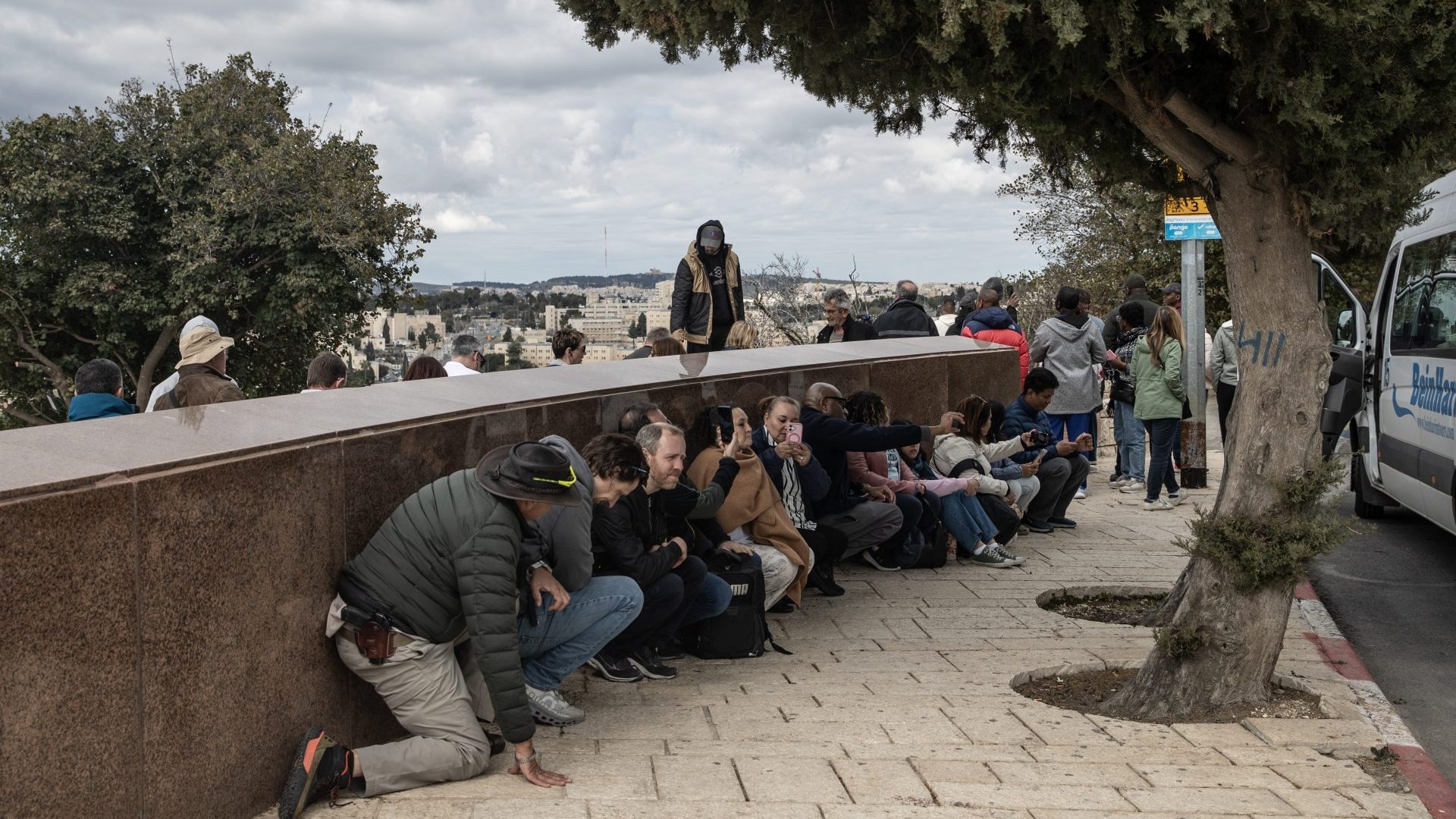
At some point yesterday, president Trump had enough of not getting what he wanted from ongoing talks with Iran over the nation’s nuclear program. As well as confirming that “major combat operations” are now under way, he has today called for regime change in Tehran.
Alongside Israel, which has been preparing for these strikes for months, Trump will continue to hit them with American military might until they change their mind, or he gets regime change.
But air power, even with the level of air supremacy and sophistication of munitions that Israel and the US possess, has never toppled a government. Arguably the closest examples are found in the Balkans and in Libya.
Nato’s 1999 78-day air campaign against Yugoslavia had a large part to play in the downfall of Slobodan Milošević’s rule. Yet while the bombing campaign was a critical factor, it did not directly oust him; he was eventually overthrown over a year later following democratic elections and a popular uprising.
A more relevant example is Libya. In 2011, Nato airstrikes supported a popular uprising against the four-decade rule of Muammar al-Qaddafi. But by the time US and European air forces launched strikes, a bitter civil war was underway, the Libyan government and military had already fractured, and a rebel body that the west hoped would form a new post-Qaddafi was holding territory and fighting.
Suggested Reading
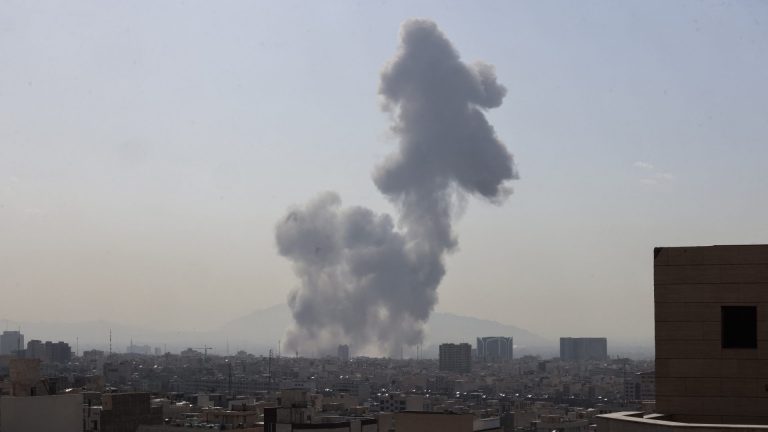

US attacks on Iran push the world towards chaos
President Trump’s views on the wisdom of the Libyan intervention have been inconsistent. In 2011 he claimed that. “Now we should go in, we should stop this guy [Qaddafi], which would be very easy and very quick. We could do it surgically, stop him from doing it [killing his own people], and save these lives.”
However, during the Republican debates of the 2016 election, Trump had denied ever being in favour of intervention in Libya and concluded: “we would be so much better off if Qaddafi would be in charge right now.” Without significant plans for a post-Qaddafi transition, Libya fell into a prolonged and bloody civil war. It remains a failed state.
Airpower alone cannot manage a post-conflict transition. States with highly repressive internal security apparatus that suffer a sudden change of leadership either see a quick transition to a new regime held in place by the same highly repressive internal security apparatus (maybe with a new name and new uniforms, but the same people and playbooks) or a prolonged period of chaos and retribution in the power vacuum created.
The successful targeting of Ali Khamenei and the Iranian leadership would create a moment in which both scenarios would be possible.
This US administration has shown no appetite to put American forces on the ground to support a transition from one form of government to another. The pragmatic US foreign policy as outlined by their recent National Security Strategy is focused on using American military power to secure its immediate aims, not the rights or well-being of citizens of another country or the ideological spread of democracy.
As demonstrated in Venezuela, the US removed Maduro but kept the rest of his regime in place after they agreed to US access to oil and aligned Venezuelan policy with the US over its geopolitical competitors. Trump has urged Iranians to “take over” the government, saying “it will be yours to take. This will be probably your only chance for generations.” When weighing up their decision to do so, they should not rely on long term outside support.
Writing in The New World last June, after Israeli PM Benjamin Netanyahu launched his last attacks on Iran, I highlighted that the “challenge Israel will face is whether they can ever have the confidence that they have achieved this [destruction of Iran’s nuclear program] – even if American firepower succeeds in destroying the deeply buried chambers of Iran’s Fordow facility… Concerns about a nuclear Iran could persist, even if the weapons of mass destruction are as non-existent as those that took the US coalition into Iraq in 2003.”
Iran says its enrichment activity stopped after its nuclear facilities were hit. Trump has repeatedly claimed the facilities were “obliterated” in the attacks and Netanyahu claimed that “we sent Iran’s nuclear program down the drain”. Since those strikes, inspectors from the International Atomic Energy Agency (IAEA) have not been allowed in to access the damaged sites.
It is not clear what these “pre-emptive” strikes signify. It could be that the US and Israel overestimated the damage done last year or underestimated Iran’s ability to rebuild the program. The strikes could be a response to genuine beliefs over Iran’s capabilities.
Alternatively, this could be a more opportunistic attempt by Tel Aviv and Washington to put in place a more subservient regime in Tehran. Reports from Israel suggest that supreme leader, Ali Hosseini Khamenei, and several other regime figures are amongst the targets of the air strikes.
For now, Iran has decided to fight fire with fire. As well as sending some of their offensive towards Israel, Iran has targeted US bases across the Middle East, potentially launching strikes against Qatar, the United Arab Emirates, Bahrain and Kuwait.
Suggested Reading
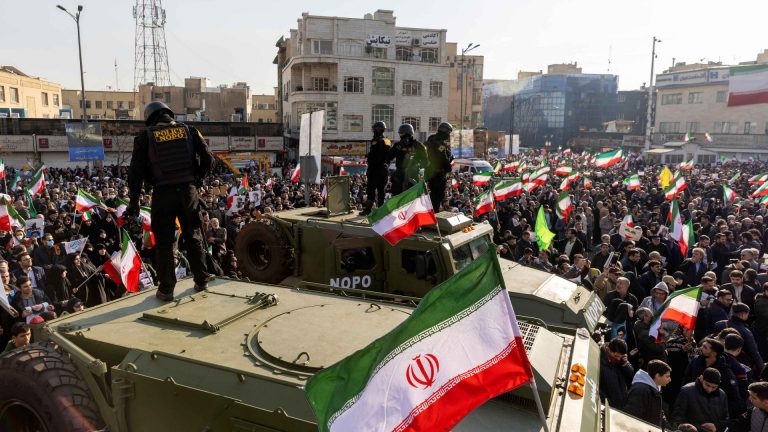

Using the dead to justify war against Iran
The spreading of the conflict is increasing the unpredictability of its outcome and the risk of intended consequences. As well as its own kinetic options the desperate regime in Tehran will also be attempting to activate its depleted proxy forces across the region and its cyber army (one of the biggest in the world) to attack US and Israeli interests wherever they can.
While the violently repressive regime is unpopular within Iran, patriotism among those still aligned to a regime tends to increase when a foreign power attacks. Iran’s security services still, just about, retain their brutal control, as demonstrated by their murderous response to the popular protests of earlier this year.
Reports from the ground in Iran suggest the response to the attacks has been deeply mixed, with scenes of panic in some areas and relief in others at the prospect of the regime’s downfall.
The philosopher Georg Wilhelm Friedrich Hegel’s often-cited reflection on history – “We learn from history that we do not learn from history” – is interpreted two ways. Most interpret it as a criticism of our lack of ability to learn the right lessons from our past mistakes.
With this quote though, Hegel was highlighting that each period and place has specifics and context that means only the most general lessons can be drawn from the past and applied to the equally unique present, so general that they are of little use.
We make both mistakes. We fail to learn what lessons we can; and at the same time try to force current events into the historical patterns we recognise. The risks in the coming days will be greater if we do not learn lessons from previous attempts of regime change. However, we should also not expect to see what we saw last June. The world has changed since then. Trump is more emboldened to use force, regardless of international opinions. The regime in Tehran is weaker and more desperate.
In the short term there will be travel chaos, disruption to oil supplies and cargo logistics, downturns in the financial markets (potentially exacerbated by disruptive cyber attacks) and the violent impact of ballistic missiles on the people and places of the wider region. In the medium term, a more insidious chaos could engulf the whole region as history is rewritten
 Most popular


Yet another Brexit prediction turns to dust

Matthew Goodwin’s by-election diary

Dear Matt Goodwin, why are you such a bad loser?

Labour tried to become the nasty party. Big mistake