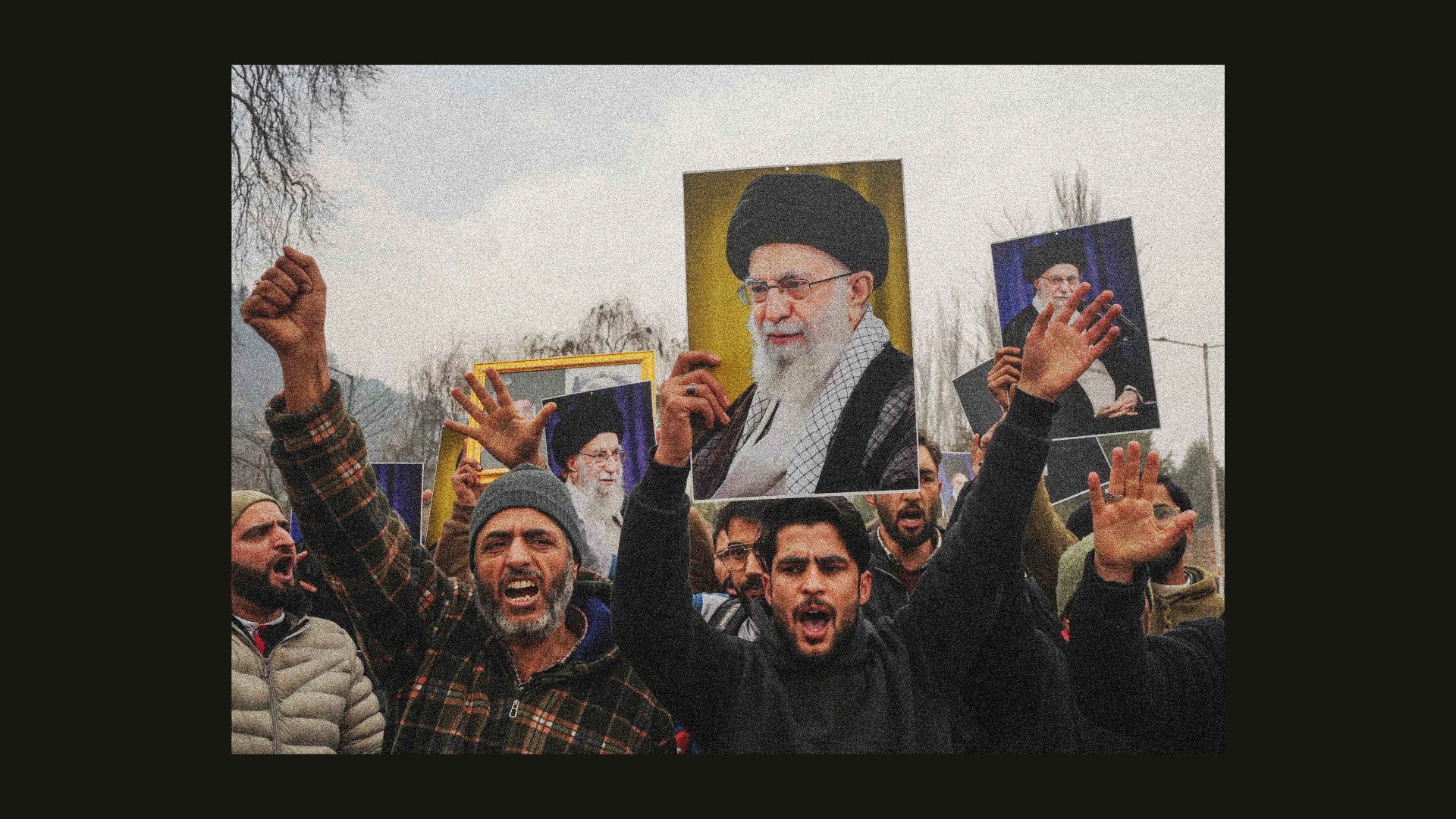
General Stanley McChrystal has told the New York Times that, “We may be at the point where we have run into a country [Iran] that has an extraordinary capacity to be bombed.” Those left in the Iranian regime trace this capacity back to another war over two millennia ago that entrenched the decision between the Shi’a and Sunni religions.
Understanding this legacy provides a frightening insight as to what will come next if US ground troops are deployed onto Iranian soil to force the end of Trump’s misguided war, that goes beyond the sheer numbers and technological capabilities of the Iranian military. It can also help explain why the killing of Ayatollah Khamenei during the holy month of Ramadan could come to haunt the US and Israel for decades to come.
In Kaveh Akbar’s novel Martyr!, the lead character Cyrus, who is considering writing a book on martyrs, claims, “But there is no escaping it. The Iranian cult of the martyr stuff.” There has been no escaping it since the Battle of Karbala in the year 680, a pivotal event in Shi’a Islam.
The Prophet Muhammad’s grandson Husayn ibn Ali faced an overwhelming military force commanded by the Umayyad caliph Yazid I. Husayn’s army was defeated, his men slaughtered and he was decapitated. This was not however seen as a defeat, but a moral victory, with Husayn becoming the ultimate embodiment of righteous sacrifice and symbol of resistance against tyranny. This event became known as the “Karbala paradigm” and established a clear dichotomy between good and evil, justice and injustice.
Iranian expert Dr. Olmo Gölz argues, the Karbala paradigm is a “living reality”. In 1979, as the despised Shah prepared to flee into exile, Ayatollah Khomeini invoked the example of Husayn. He called on Iranians to rise up against a despotic regime led by “the Yazid of our time”.
During the Iran-Iraq War there was a powerful resurgence of the martyrdom ethos in Iran. The Islamic Republic, under the leadership of Ayatollah Khomeini, framed the war as a defense of both Islam and the nation, drawing heavily on the Karbala paradigm, fusing it with concepts and metaphors from classical Persian mysticism.
Portraying the war as a contemporary struggle against the forces of evil, with Saddam Hussein cast in the role of a modern-day Yazid, it was used to mobilise hundreds of thousands of young people to go to the frontlines and to offer their lives.
In a speech in 1978, Khomeini declared: “The leader of the Muslims taught us that if a tyrant rules despotically over the Muslims in any age, we must rise up against him and denounce him, however unequal our forces may be, and that if we see the very existence of Islam in danger, we must sacrifice ourselves and be prepared to shed our blood”.
And oceans of blood were shed, with over one million lives lost. Iran’s fallen soldiers were hailed as “modern-day Husayns” and the war itself a “new Battle of Karbala”.
The concept of martyrdom in Iran has woven religious ideals with ideas about nationhood to become a source of social and political cohesion. Akbar’s Cyrus wants to write a book on martyrs, about, “People who gave their lives to something larger than themselves.”
Martyrdom in Iran offers meaning and belonging, even when the government cannot offer the most basic material goods to its own people. Throughout the Islamic Revolution, the Karbala paradigm has provided a revolutionary ethos, encouraging active resistance against perceived oppression, which after Iraq became the West, and specifically the US.
America’s often clumsy attempts to undermine the Iranian regime provided an easy narrative, from long standing sanctions to a US Navy warship accidentally shooting down Iran Air Flight 655 in 1988 killing 290 civilians aboard (Ackbar includes this by writing Cyrus’s fictional mother on to that tragic flight).
There is one noteworthy period of exception to the enmity, was the sale of over 1,500 missiles to Iran during the Iran-Iraq war by the Reagan administration. This violated their own arms embargo, and was an attempt to counter Soviet influence in the region and also to secure the release of US hostages being held by Iran.
Suggested Reading

To Trump, Iran isn’t war – it’s showbiz
This was facilitated by what now seems a surprising intermediary: Israel. In the mid-1980s ties became so close that Israeli prime minister, Yitzhak Rabin, claimed: “Israel is Iran’s best friend, and we do not intend to change our position”. The profits from the arms sales were directed to Contra rebels attempting to overthrow the left wing Sandinista government in Nicaragua. When the arrangement was exposed it became known as the Iran-Contra affair.
When, in 1988, at the end of Iraq-Iran war, Khomeini signed a ceasefire, he bemoaned, “Happy are those who have departed through martyrdom. Unhappy am I that I still survive.” Through killing Khamenei in an airstrike at the beginning of this war, the US and Israel may now have bestowed on him the glory of martyrdom that eluded Khomeini.
The statement announcing the death of Khamenei on Iranian state TV claimed that: “Leader and Imam of the Muslims, His Eminence Ayatollah Seyyed Ali Hosseini Khamenei, on the path of upholding the exaltation of the sacred sanctuary of the Islamic Republic of Iran, drank the sweet, pure draft of martyrdom and joined the Supreme Heavenly Kingdom.”
Suggested Reading

Iranian protesters: we don’t want the shah, the mullahs or the war
Some Iranians are already likening Khamenei to the original martyr Husayn. Assassinating the Ayatollah (in the holy month of Ramadan) could come to haunt the US and Israel for years. Venerating Khamenei will provide the Iranian regime, however fallaciously, a form of legitimacy to keep fighting the new Yazid, keep cracking down on its own people and long after president Trump manages to walk away from the mess he has made, keep seeking revenge.
It is important to note that years of repression and economic chaos mean far fewer Iranians are buying the regime narrative, despite its deep cultural and religious roots, but those roots of profound resilience remain. Iran’s army is estimated at around 600,000 strong with over 350,000 reservists. Many are there as they have no choice, but they would be fighting on the difficult terrain of their ancient homeland and they would know the Americans were coming.
For the sake of all involved we should hope that Trump is deploying further forces to the region as part of his increasingly desperate negotiation strategy as he attempts to extract himself from a war against a country he does not understand, rather than a serious consideration of a ground offensive.
In Martyr! Cyrus’s uncle Arash had been tasked with “the strangest job in the Persian army” during the Iran-Iraq war. At night, after the human wave attacks and the mustard gas left thousands of Iranians dying on the battlefield, it was Arash’s job to “secretly put on a long black cloak, get atop a horse, and ride around the battlefield of fallen men with a flashlight under his face.
He was meant to look like an angel, and to provide the dying men with comfort and reinforce their belief in the justness of their cause. In a ground war in Iran, there would again be countless casualties. The Iranians would have a very clear sense of why they were making such a sacrifice. It is unclear whether the Americans would have any comparable story.
 Most popular


Matt Goodwin’s road to derision
GB News Scandal: How Ofcom let GB News corrupt British media
GB News sets its lawyers on to The New World
Matt Goodwin’s new book: The missing chapter