Back in my Daily Mirror days, despite then being a chain smoker – yuk – I would occasionally put forward story ideas fed to me by the anti-tobacco campaign ASH, Action on Smoking and Health. These stories, often based on fresh evidence linking smoking to lung cancer (dismissed by the tobacco industry in the 1980s and 90s with the same mix of lies, lobbying and gaslighting employed by the fossil fuel industry in the climate crisis now) rarely saw the light of day.
One day a colleague, to whom I was venting my frustration at how frequently these stories hit the spike, suggested I give up and focus on other things. “But why?” I asked. “How can this not be of interest to our readers?”
“Because,” replied my grey-haired friend, “it is of even more interest to the advertising department.” The penny dropped. An anti-smoking campaign would be biting the hand that fed us. Big tobacco paid big bucks for big adverts.
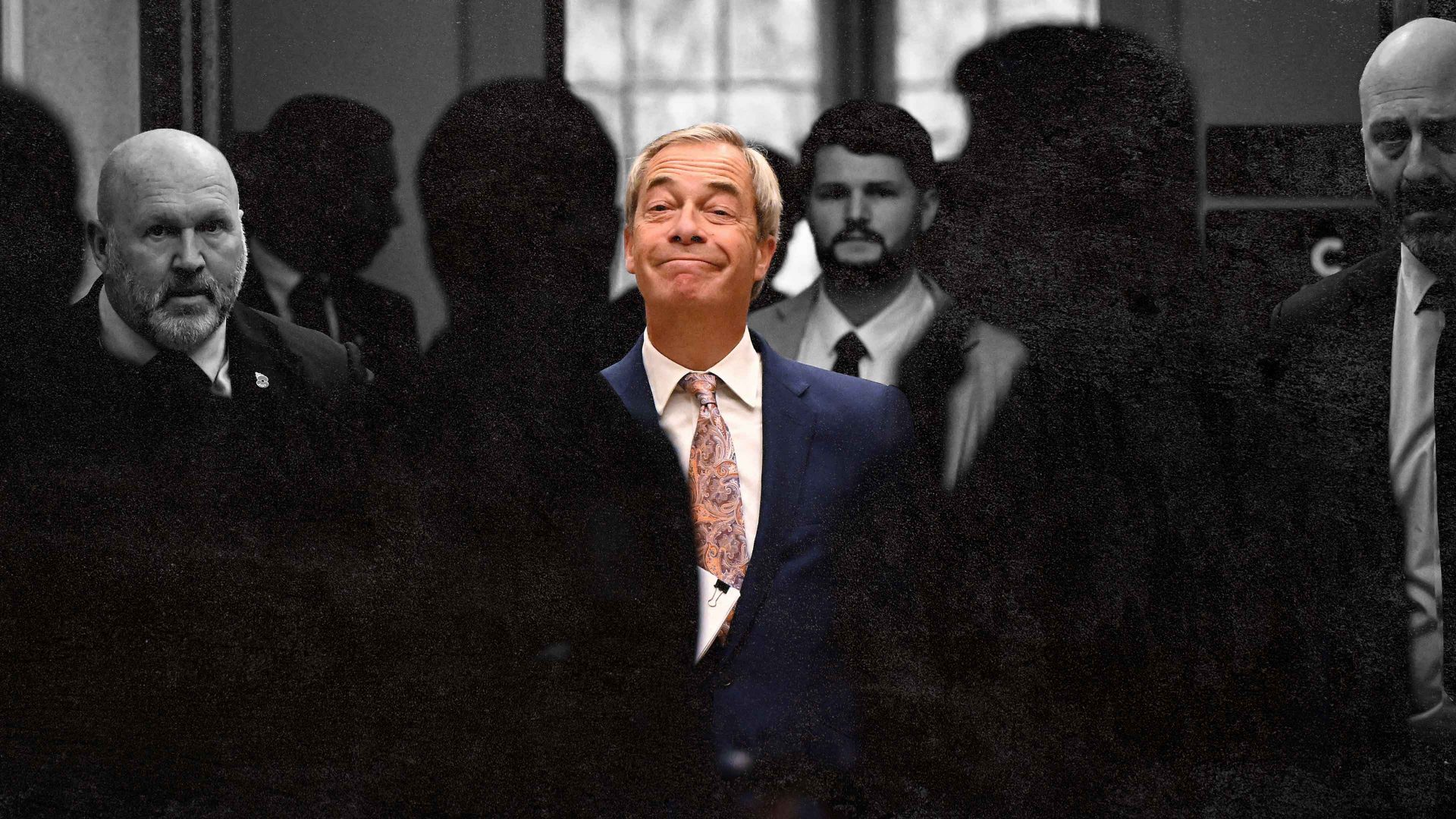
This all came back to me last week, as the face of the nicotine-stained man-frog that is Nigel Farage smiled out at me from huge adverts in several of those newspapers that work so hard to promote the right, denigrate the left, get the broadcasters to absorb their agenda and present it as the centre of gravity of “public opinion”.
Alongside the picture was a portentous Open Letter to Britain, modelled on the “Dear England” letter from football manager Gareth Southgate a few years back, though not as well written, not as hopeful, and in true Farage style designed further to divide and rule rather than bring people together around collective endeavour. It was a collection of his greatest hits – on your side, main parties useless, broken Britain, alarm-clock Britain (whatever that means), get businessmen into the cabinet, slash spending, scrap net zero – though with not a mention of his greatest hit of all, Brexit. The B-word is very much a no-go zone for Mr F, who deep down knows what a total F-up it has been, for the country, if not for him.
So why now for this £800,000 advertising splurge in the Mail, the Times, the Sun, the Express and the Telegraph? That is a lot of money for a party that claims it lacks the resources to mount an investigation into whether its “Russia problem” goes beyond the “one bad apple” (yeah right) of jailed MEP Nathan Gill.
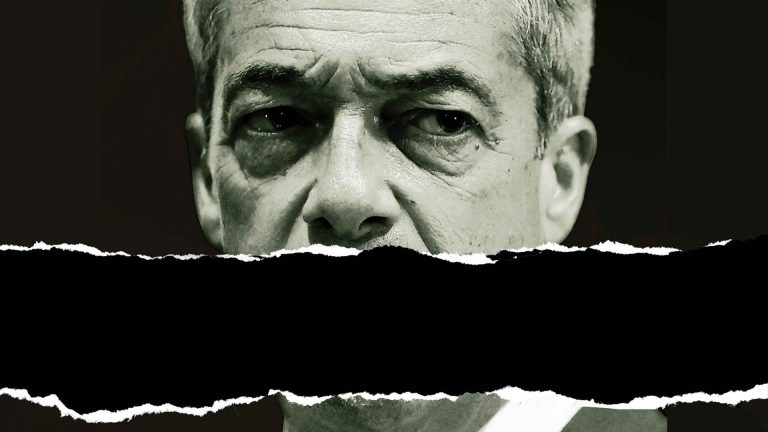
I suspect Mr Gill is part of the answer. The ad blitz followed a few days during which finally, after years of being treated as a commentator rather than a politician, Farage was subjected, ever so slightly, to the kind of scrutiny that someone who puts himself forward as prime minister ought to face. The stories of alleged racism when he was at school were beginning to get the kind of attention they never did on the several previous occasions they had been brought to public attention.
His handling of them lacked his usual brio. We even had a hint of a sweaty Richard Nixon top lip when finally a journalist confronted him with a few tough questions.
Meanwhile, despite the media colluding for months with a virtual blackout on Gill, the former Farage Party MEP’s 10-year-plus jail sentence for taking bribes from Russia finally started to get moderate attention. And oh, what a wonderful irony that fellow ex-MEP David Coburn issued a denial of taking any Russian money “speaking outside his chateau in France”.
If Gill had been a Labour MEP, we would still be hearing about him. I mean, Angela Rayner’s stamp duty led the news for days on end.
Ten years for working for the Russians – one-day wonder. He’ll be forgotten by Christmas, even sooner thanks to Reform bunging the papers large cheques to fill pages they have for years let Big Nige fill for free. And, like the tobacco advertisers of old, doubtless Reform’s advertisers dropped heavy hints that “there’s plenty more where that came from”.
Real journalists would want to know where the money came from, and whether any of it was in rouble form. The right wing rags prefer to take it, dial down on the Farage scrutiny, and get back to the relentless coverage of “the rise and rise of Reform”.
If Keir Starmer thinks Reform’s Russian links need proper investigation – on which I agree – I don’t agree that Reform should be the investigating power. All across Whitehall, there is plenty of evidence of Russian interference in our democracy. Only the government has the authority to establish the kind of inquiry such a serious issue merits. I don’t understand why it hasn’t been set up yet.
Sitting watching TV on Friday night, I looked at my (on silent) phone, and in had pinged a stack of messages about a story in the Daily Telegraph that I was leading a “plot” to persuade Labour to back a return to the customs union and “even” a second referendum to get back into the EU.
Apparently I was working in cahoots with Tim Allan, my former deputy in Downing Street who is now back there as director of communications, and Tom Baldwin, Keir Starmer’s biographer and the former comms director for Labour and the People’s Vote campaign. A trio of Remainiac Labour spin doctors… a true Telegraph delight, around which to build a stack of anonymous quotes from alleged Labour insiders.
Suggested Reading
Nigel Farage has a race problem
The “plot” was news to me, not least because plots are usually secret, but I have never hidden my determination to keep highlighting the damage of Brexit and the need to fix the mess it has created. And whenever I speak to either of my co-plotters (sic), I inevitably have a moan that next to nothing is happening on the anti-Brexit front.
What encouraged me about the Telegraph-inspired texts about the plot that doesn’t exist is how much desire there is that it should. When a very wealthy businessman you’ve not heard from in years sends a message saying “How much do I give and where can I send it?” the campaign juices get stirred once more.
ASH never gave up, did they, and eventually a government came along that banned tobacco advertising and sports sponsorship. The anti-EU people never gave up, even when they were dismissed as cranks and crackpots.
Nor should those of us who think Brexit was the worst act of political self-harm known to man, and a far bigger reason for the economic mess we are in than Rachel Reeves and the vast bulk of her parliamentary colleagues are prepared to acknowledge. I thank the Telegraph for the reminder.
Living in London as I do, I’ve perhaps never fully appreciated the appeal of the National Theatre’s “filmed live theatre” programme. I also had doubts about whether the experience of being present in a theatre for a live performance could be matched when watching from a distant cinema seat.
Having last week seen The Fifth Step, starring Jack Lowden and Martin Freeman, at the Everyman in Belsize Park, I am a convert. Just two men and a single square stage set that never changes, save for a moved chair or two. Yet it was spell-binding; beautifully filmed, the shots of the live audience never offputting.
It dawned on me that you see so much more – not least close-up facial expressions – on a big screen from a comfy seat than you do when crammed in, pissed off at the lack of leg room, wishing the woman in front would stop sniffing, and cursing the man behind who thinks now is the time loudly to demolish a packet of mini Crunchies.