So it is a whole Olympiad, an entire US presidential term, a degree course with an MA thrown in, since Vladimir Putin sent in the troops and the tanks, encouraged by briefings from his military advisers that Ukraine would be his in days, maximum weeks.
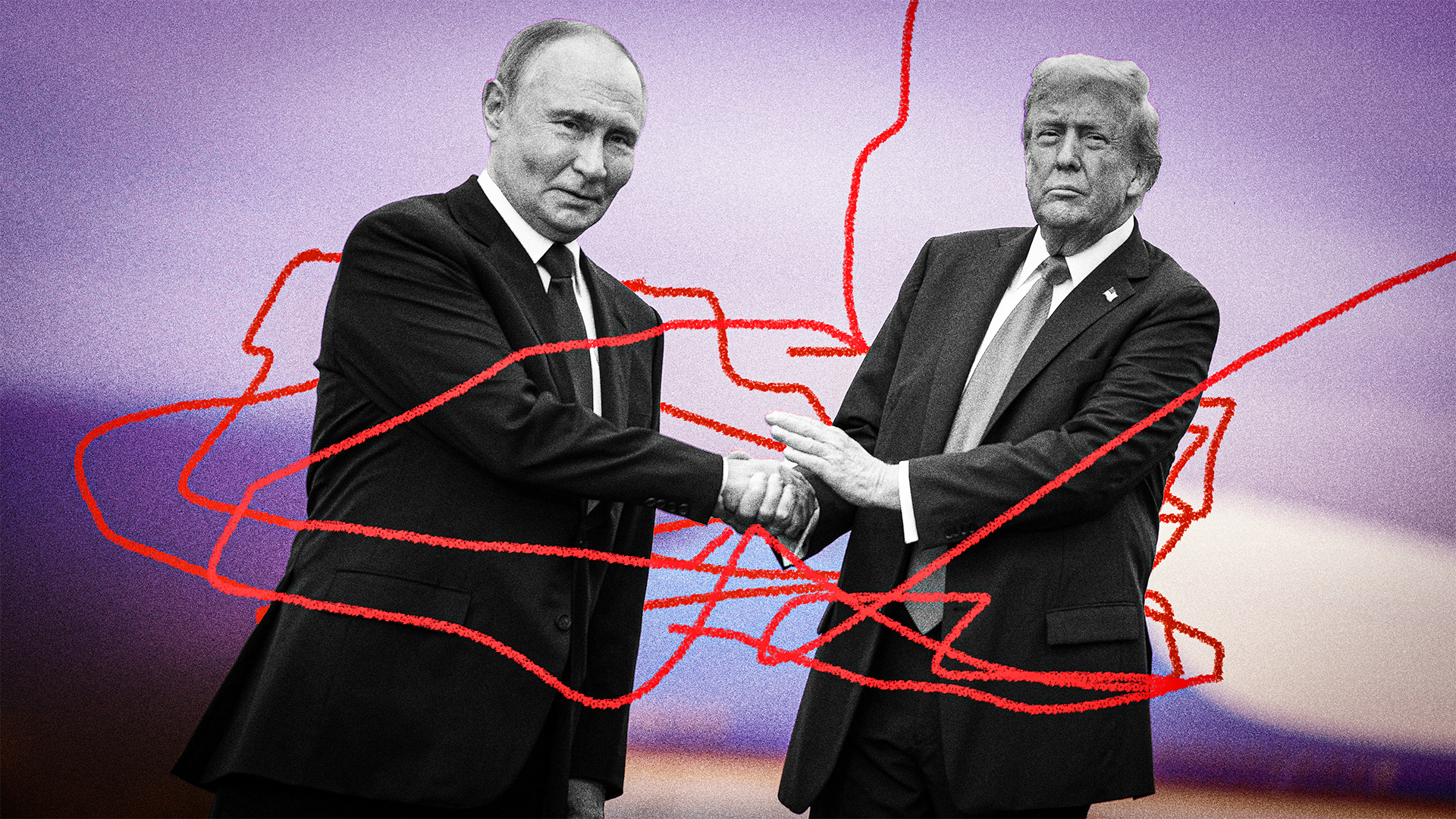
Around half that time has passed since Putin’s chief weapon Donald Trump told the world that if the American people put him back into the White House, he would end the war within 24 hours. Even by Trump’s bloviating boastful standards, it was a huge claim which, like so many of his bloviations, has failed to materialise.
President Zelensky meanwhile, who was offered but rejected a secret flight to safety by Trump’s predecessor Joe Biden as Putin’s “special military operation” (sic) began, is still there, still standing, still fighting, this week leading anniversary events in Kyiv to remember the fallen during four years of war, and to signal his country’s determination not to be ruled by a dictator and indicted war criminal.
Ahead of Tuesday’s ceremonies, I have been picking the brains of diplomats, soldiers and politicians who are either in Ukraine, or involved in the battle to keep it free. Diplomacy, and in particular the brutality of Putin and the thin-skinned narcissism of Trump, prevent many from saying in public what they might say in private.
But if I had to sum up the centre of gravity of these discussions, it relates to what one diplomat called “narrative frustration” created by the combined forces of two of the most powerful propaganda machines in the history of propaganda, the Trump White House and the Putin Kremlin, for both of whom truth is very much an optional extra.
“Putin keeps saying he is winning, when he’s not,” he said. “Trump still seems to think Putin has all the cards, which he doesn’t.”
A military official explained: “Russia’s advance has been slower than any major war in living memory, and the cost has been enormous. More than a million Russian casualties, including well over 320,000 deaths.” So imagine Britain’s three biggest stadiums – Wembley, Twickenham and Old Trafford – filled to capacity with Putin’s dead soldiers… you would still need another smaller ground to pack them all in. That is quite a price to pay for advances measured in metres not miles.
At the Arctic Security event in Munich I mentioned last week, German defence minister Boris Pistorius was asked why Europe’s leaders were not directly involved in the negotiations to bring the war to an end. He could not have been clearer in his response… essentially, because Putin doesn’t want us there, and Trump lets him dictate the terms. All part of a Trump pattern of rewarding the aggressor not the aggressed.
One of the many obscenities of Trump Term Two is the way he presents himself and the US as the sole arbiter of major international conflicts and crises. But given that he has pretty much switched off the spending tap when it comes to military support for Ukraine, and European powers have to a large extent stepped up to fill the gap, it is absurd as well as offensive that he continues to play Putin’s game in keeping European leaders at bay when it comes to the question of deciding how this war ends.
Ukraine’s civilian casualties have hit a record high since Trump’s re-election, while the continual Russian bombardment of energy infrastructure to add to the pain of a brutal winter is likewise helped by air defences weakened by the US indifference to human suffering, and pandering to Putin. Europe’s military support meanwhile has risen by 67 per cent, much of it ending up in US coffers as the US sells kit that once was given as part of a genuine transatlantic alliance.
I was pleased to see that at the recent Russia-Ukraine talks in Geneva, mediated by Trump’s golf buddy and Putin fan Steve Witkoff and Trump’s son-in-law Jared Kushner, officials from France, Germany, the UK and Italy turned up anyway, despite not being invited. Next time they should be replaced by the leaders.
Merz, Macron, Starmer and Meloni should just turn up, and demand entry. Right now, we have more to lose than the Americans, whose shot-calling days should be over, given whose side they appear to be on.
If you’re looking for good English language coverage of Ukraine, check out the online paper Kyiv Independent. I was especially struck by a brilliant recent article by Elsa Cort who, I learned on reading her byline bio, is a Brit living in Ukraine.
Her theme was resilience, and above all irritation at the extent to which Ukraine’s “resilience”, and that of its people, dominate media and political debate.
“Ukrainians shouldn’t have to be resilient,” she wrote. “If Ukraine’s partners were to give the kind of support Kyiv continually begged for, civilians would not have to be suffering.
Praising their resilience is like standing on the shore, watching a person struggle not to drown in a riptide. Instead of sending a lifeboat to save them, you praise them for being such a strong swimmer. If you decide a nation is resilient, you shrink your obligation to take any action to help them. Resilient people always figure it out on their own, right?
Suggested Reading
This is what happens when Putin loses
The continued repetition of a resilience narrative is also damaging because it slowly softens outsiders’ comprehension of what war is over time. Foreign audiences don’t want to think about the ever-deteriorating conditions civilians are forced to live in — they want to read about how bars stay open during a blackout, or focus on the ways in which Russia could be losing.
It’s uncomfortable to think about how the trauma of Russia’s war in Ukraine is affecting real people, every day, and how it will seep down through generations. It’s far more digestible to view the war through the lens of resilience because it transforms a nation’s suffering into a positive, hopeful, character-forming experience.”
She is not wrong. To repeat… “If Ukraine’s partners were to give the kind of support Kyiv continually begged for, civilians would not have to be suffering.” That’s the United States, for sure, but it is Europe too. I was chatting to chess grandmaster and Putin sworn enemy Garry Kasparov, who said Ukraine’s allies present themselves as fighting to save Ukraine. In truth, he said, “they are fighting for all of us, and it is scandalous we don’t help them more.” He’s not wrong either.
We all know how closely Trump studies polling, so I hope one of his team has had the balls to show him the results of a recent YouGov poll asking Americans to give favourability ratings of the best-known world leaders. Top of the pile, and the only one with a positive rating in double figures, is Zelensky at +14.
In second and third place come two of Trump’s biggest bogeys, Canada’s Mark Carney and Mexico’s Claudia Sheinbaum. Our own King Charles is fourth, while the presidents and prime ministers leading Japan, Italy, France, Argentina, Brazil and the UK all come well ahead of Trump. Mind you, so does Delcy Rodriquez in Venezuela, Mayib Bukele in El Salvador, India’s Narendra Modi and Belarus dictator Alexander Lukashenko.
Trump, at minus 16, is 16th in the list of the 25 leaders surveyed, narrowly ahead of his close friends Viktor Orban and Benjamin Netanyahu. The bottom four relegation places go to Xi Jinping (-44), Nicolas Maduro (-53), Putin at -72, with only Kim Jong Un more unpopular than him, at -73.
I mean, who would have thought it, that democratically elected leaders with a bit of empathy might, in general, be more popular than dictators?