For various reasons that will become clear, this week’s column is devoted to the importance of books. The first to get a mention is What If Reform Wins by Times journalist Peter Chappell. The answer, if I may paraphrase with a touch of my own spin on top, is that a bunch of grifting charlatans, having won power by pretending to be for the ordinary working man against the elite, when they are in fact themselves the privately educated, crypto-funded new elite, will quickly descend into a corrupt, incompetent Trumpian rabble, but meanwhile do enormous damage to our rights, our institutions, our living standards, our public services, and our standing in the world. A bit like Brexit, but even worse.
Though the book inevitably relies on Chappell’s imagination, as it is set in the future with Nigel Farage already inside Number 10, the dialogue is all too believable, given how much we have heard from the voices we all know too well because of how much media time they enjoy in the here and now.
The policies they seek to implement, many of them designed by one of the two Farage “contractors” (aka very very very close aides) at the centre of Reform’s latest money scandal, are based on what their leading politicians say they intend to do. So whether deporting more than half a million people, getting out of the ECHR, destroying the BBC or introducing Trump-style “drill baby drill” and killing off net zero, we cannot say we have not been warned.
But the Americans were warned about Trump, were they not? Indeed, they had four years of his corrupt and mind-bendingly incompetent narcissism as warning, yet having first rejected him, brought him back for a worse dose second time around. So while doubtless Farage’s ambitions to take his grifting charlatanism to Downing Street have taken a hit as a result of the undercover exposure of the grisly characters at his side, and their cavalier approach to the law, we should never count him out. He and his party have to be counted out at the polls, and that is down to all of us.
“My name is William. I’m from the UK. My grandmother lives in Nottingham. It’s a beautiful city.” If that reads like something out of a school textbook, that’s because it is. I’m sure lots of you remember similar from your schooldays. “Je m’appelle Guillaume. Je suis né en France. Mes grands-parents habitent à Nice. C’est une belle ville… ich heiße Wilhelm. Ich stamme aus Deutschland. Meine Großeltern wohnen in Köln. Es ist eine schöne Stadt.”
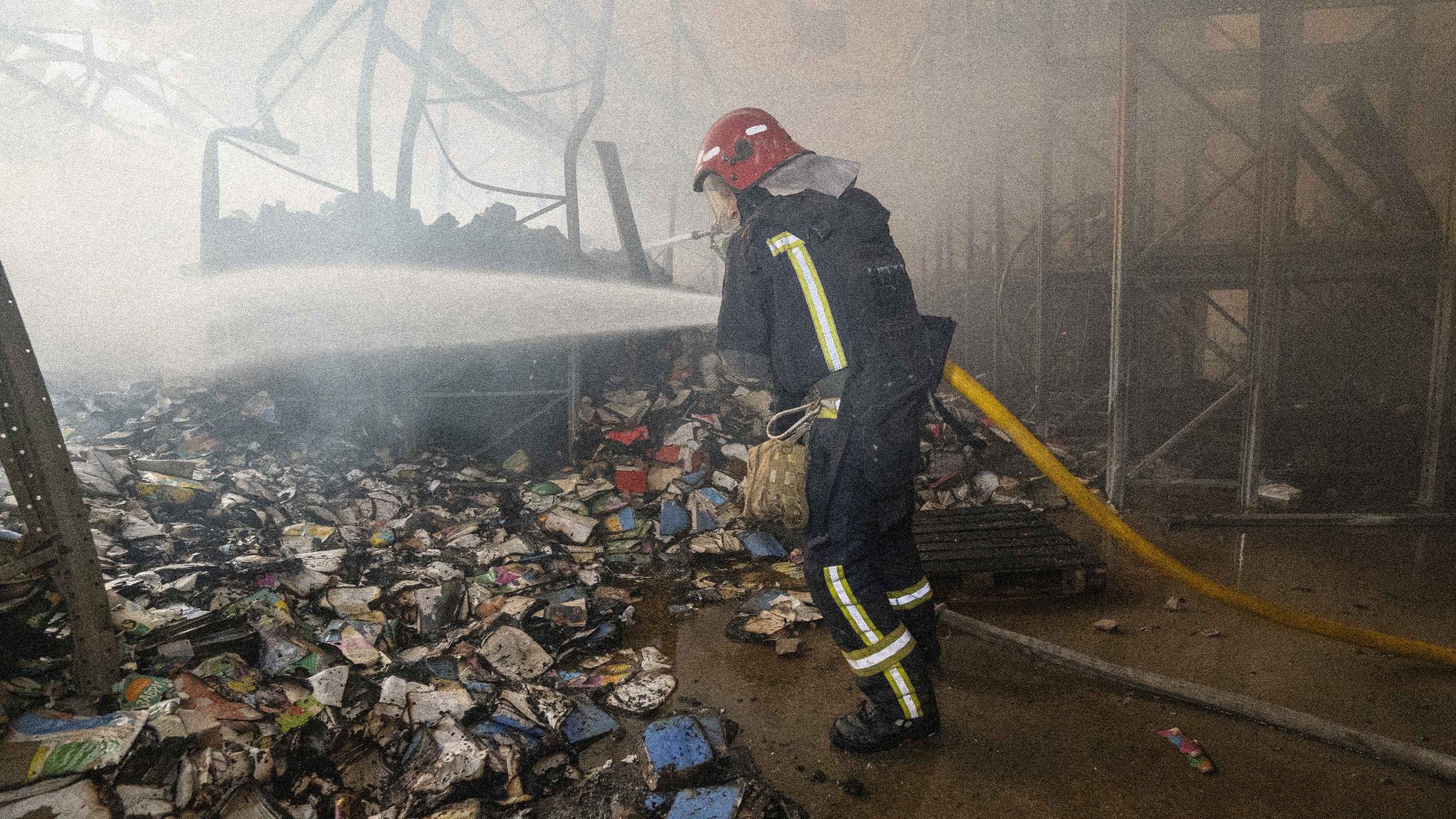
The unexpected beauty of Nottingham was drawn to my attention in the BBC reporting of recent Russian attacks on Kyiv, which led to 12m books being destroyed, many of them schoolbooks newly printed ahead of children going back to school. The deliberate destruction of publishing houses, bookstores and open-air book markets means one third of Ukrainian books due to be printed this year have gone, all part of Vladimir Putin’s special military operation (sic), in which, Honest, Guv, he really doesn’t attack civilian life or civilian infrastructure (sic/sick).
Dan Johnson, the BBC reporter who visited the bomb sites in the immediate aftermath, found in the ashes that charred page about William from Nottingham. He also interviewed a 28-year-old book blogger, Liliya Velyka, who told him: “Books are saving us and losing this is like losing our hearts.”
I heard similar sentiments visiting a Kyiv bookstore when I travelled there a few months ago. It is the reason Putin does it. The same goes for the bombs that have fallen on sports stadia, theatres, museums, art galleries, libraries, as well as important historical or religious sites. It is an all-out attack on Ukraine’s culture, and on the things that make life bearable in such awful times.
I discussed all this and more at Kings Place in London on Monday, when talking to Guardian journalist Luke Harding about his book on Ukraine, Betrayal. The title is very much directed at the US, both under Joe Biden and Donald Trump, the extent of the betrayal under the latter stomach-churning. It is only when you read a book like this, when so many forgotten events, claims and statements are brought back under scrutiny that you get a proper sense of just how consequentially venal this Trump Term Two really is.
Fiona asked me if I had learned anything new. Lots is the answer, but if I had to pick one thing it would be that I hadn’t quite realised the US Treasury secretary Scott Bessent was such a nasty piece of work.
Am I alone in thinking that more and more public transport passengers are reading books and leaving their phones in pockets and bags? Or maybe I am just looking out for it?
There was definitely a time, not that long ago, when a journey on the London Underground would leave me crestfallen as I scanned the carriage and saw almost universal scrolling or game-playing going on; crestfallen at the impact of the numbing brain-mashing thus inflicted.
Yet in recent days I have noticed a good smattering, in almost every carriage travelled in, of books in the hands of my fellow passengers.
I do occasionally doom-scroll myself, but I have got much better at stopping after a few twitches of the thumb, and telling myself: Instagram and a good book are at polar opposite ends of the educational and entertainment scale. Never be without a book. Get it out and read it if you feel the temptation to thumb twitch.
Social media’s role in the attention economy, and the belief among many news executives that their viewers and readers have the attention span of a gnat, means mainstream journalism tends to be somewhat lacking in depth a lot of the time too. Present company is excepted, of course, and a massive shout out to the Verbatim team who carried out the investigation into Reform, and Channel 4 News for launching it into the world. I expect another such story will be along before long. Patterns, you see.
Some of the best books I have read recently have been written by journalists, perhaps able to explore over 300 pages stories that merit such exploration, when the most they will get in their newspaper is a couple of thousand words. Luke Harding’s is one of them.
The Nord Stream Conspiracy by Bojan Pancevski. Brilliant. London Falling by Patrick Radden Keefe. Remarkable. Weimar by Katja Hoyer. Superb. Regime Change by Maggie Haberman and Jonathan Swan. As good an account of the madness of Trump Term Two as I have yet read. And in my recent German language reading list, Deutschland 2033, by Justus Bender, a terrifying scenario setting out what he sees as the reality of an AfD government in Germany, 100 years on from Hitler first securing elected power.
Books really matter. It’s why fascists have always liked to ban or burn them. And why Putin bombs them.
Finally my own latest book is done, and on its way to the printers. There is a little competition under way via The Rest Is Politics to guess the title, which will be announced on Friday. I have gone with the single-word title option, like Betrayal, Thomas Piketty’s Capital, Rory Stewart’s Middleland, Paul Mason’s Reds.
You will be hearing a lot about the word, and the book, because Matt Kelly of these parts has read it, loves it, and wants to make it part of his next big subscription drive. Fine man.