Watching and hearing JD Vance being booed at the Winter Olympics in Italy, I wondered whether he might decide to hang around in Europe, and head to the Munich Security Conference for a repeat of his greatest hit exactly one year ago.
That was the moment the US vice president filled a huge bucket with America First bile and proceeded to empty it all over the heads of assorted European leaders, diplomats, military top brass, spooks and foreign policy geeks.
At the time, you may remember, the world was waiting to discover how the Trump administration would belatedly deliver on the promise to “end the war in Ukraine in 24 hours,” and deal with the seeming acceleration of Vladimir Putin’s onslaught on civilian life and infrastructure. Given that Vance virtually ignored the war, instead choosing to condemn Europe for our alleged loathing of free speech, alongside other assorted gaslighting insults, before heading off to meet the leader of the hard right AfD, it is hard to overstate just how deep into the wounds of diplomacy his words struck.
And that is why, one year on, people gathered here were still talking about his speech, and the context it laid for so much that has followed in the 12 months since, from Trump’s continuing bromance with Putin to his UN-bypassing, unilateral interventions in trouble spots around the world, and above all perhaps – for this audience at least – his Nato-busting desire to add Greenland to US territory, a claim he repeated on the eve of the conference.
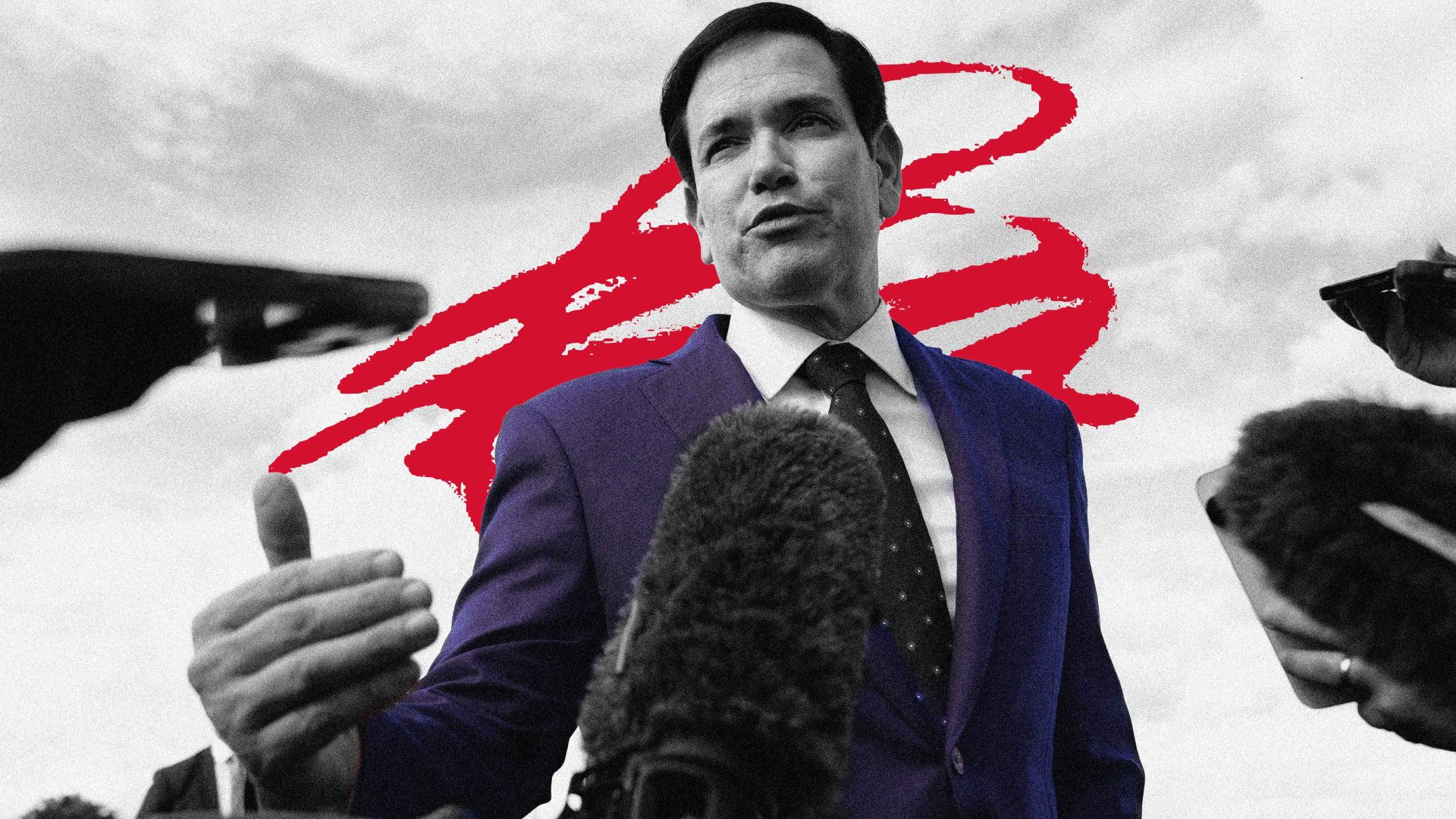
In the end, Vance scuttled home from Italy, and it was left to US secretary of state Marco Rubio to lead the US delegation here. His Saturday morning Valentine’s Day speech was perhaps the most anticipated of the three-day event, so it was very much standing room only, and by the end, many of those lucky enough to get seats rose to their feet to give Rubio something close to a standing ovation.
Watching and hearing the response, I made a note to add “Rubio Munich 2026” to my list, for the next time I address the issue of expectation management. Here were some of the smartest people in Europe, at a time of geopolitical turmoil, falling for one of the oldest tricks in the book… make people think what is coming is truly terrible, so that when it is only awful, it feels OK.
Those who seemed to fall for it included the MSC chair, diplomat Wolfgang Ischinger, who began his post-speech Q&A with Rubio by suggesting there was a huge sigh of relief in the room at “the message of reassurance and partnership” we had just heard. I’m sorry, but that was not what I heard.
For sure, Rubio’s speech was better written and with more charming grace notes than we heard in the same room from Vance last year. But this was no Valentine’s Day missive of love.
Once you stripped away the warm words about Shakespeare and the Beatles, Mozart and Michelangelo, and even warmer words about Europe’s role in bringing the USA into being, and any American being “a child of Europe,” the message was virtually identical to Vance’s: You guys have lost the plot. You’ve let immigration and woke destroy your culture and Christian faith. The UN is a failure. Nothing good happens without the US, Nothing much happens at all without Trump.
The “rules-based global order,” which Rubio spent most of his pre-Trump life supporting, was now a “foolish idea… a delusion.” He railed at European welfare, suggested our energy policies existed to “appease a climate cult,” (this at a time California risks burning to extinction while Florida risks sinking).
Yes, the US made mistakes too, he said, but that was before The Great Orange Leader came to save us from our follies, and deliver “renewal and restoration” for America and the world.
Suggested Reading
Trump’s lies are trashing the dollar
Rubio will have been purring inside at the Ischinger response, and the sight of a good chunk of the audience rising to its feet. Resolutely stuck to my seat, my head now shaking at the communal naivety, I wondered, am I too deep into Trump Derangement Syndrome not to be able to see why he merited such a response?
So I went away and read carefully the text of what I had just heard, and if anything, it made me more alarmed by the substance, not less. I then bumped into a German official, we chatted about the speech, and her judgement was even harsher than mine.
She said she had a close friend who had been a victim of domestic abuse at the hands of her husband. “That was like watching the diplomatic version of what happened to my friend,” she said of what we had just witnessed, and then went into a riff, imagining Rubio as the abusing partner in America’s relationship with Europe:
“Listen, honey, we go back a long way, we are a team… and I am being tough on you because I love you so much, and I don’t want to lose you … so this is for your own good… WHACK!… I know it hurts and I know it is making you doubt me, but honestly in the long run, this is best for both of us… WHACK! We will emerge stronger but you just have to do as you’re told… WHACK!”
Later, I attended a panel on Arctic security. Not least thanks to Trump, and his claims on Greenland, there was a big crowd trying to get in, a Norwegian civil servant joking that “normally, we struggle to fill the front row.”
Both Mette Frederikson, prime minister of Denmark, and Greenland PM Jens-Frederik Nielsen were on the panel, she nursing a cold, he looking a little pale and stressed. They were joined by the foreign ministers of Germany and Canada, Boris Pistorius and Anita Anand, and Lisa Murkowski, the Republican senator from Alaska. They were all united in their condemnation of US claims on Greenland.
“The pressure on us is unacceptable,” said Nielsen. “But this is not only about Greenland. Imagine a Nato country threatening an ally, like we are just a puzzle in a big game.”
Earlier, I listened to Elbridge Colby, US under-secretary of defence, said to be one of the authors of the Americans’ new National Security Strategy, which has a lot to say about Europe’s so-called “civilisational erasure,” and not a word about Taiwan.
Colby was asked very directly whether, if a Nato ally like Estonia was attacked by Russia, the US would abide by the Article 5 principle that an attack on one was an attack on all. It was, as he was subsequently reminded, a straight Yes or No question.
His answer was a long-winded mini-lecture, with lots about Nato 1.0, 2.0 and now Nato 3.0, whatever that means; a dismissal of the question on Article 5 as “theological framing”; a sideswipe at “the liberal rules-based order”; a quote from former German chancellor Konrad Adenauer that “you can’t rely on the Americans all the time… it’s not reasonable.”
What I took from it all was that his answer to the Yes-No question was, basically, No. Rubio put it far more eloquently than either Vance last year, or Colby now. But the message is the same.
Europe needs to face that, not pretend that just because Rubio had diluted the Vance bile a little, somehow we are all best buddies again.
 Most popular
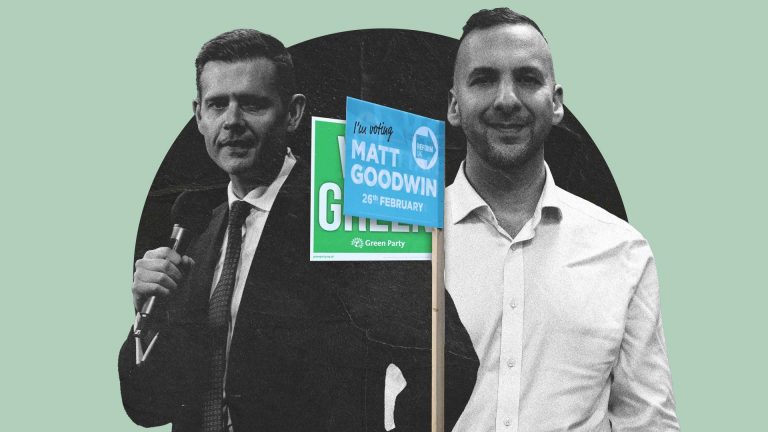

Matt Goodwin, Zack Polanski and Lucifer: the fight for Gorton and Denton

Face it: Trump’s going mad

Am I still a friend of Peter Mandelson? It's complicated
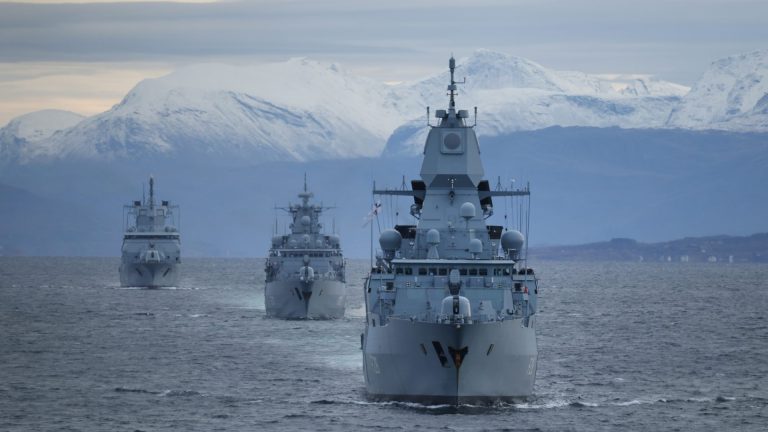
Three years to save Europe