After all the warnings to bring thick coats and thermals, Kyiv was reasonably dry, and the temperature a bearable one degree Celsius as we stepped off the train at 5am on Monday.
The sleeper train was something of a misnomer. Well, it was a train for sure, albeit an old and clunky one, which reminded me of those black and white movies when goodies were chasing baddies from carriage to carriage, and almost falling through the cracks. But as for the sleeper bit, during a twelve hour stop-start journey through the night from the border with Poland, I reckon I slept for about three of them, max. In general, I think being tall is an advantage in life. Sleeper trains are very much an exception to this rule.
The trip coincided with the fourth anniversary of Russia’s full-scale invasion of Ukraine, and I was invited to accompany the EU’s enlargement commissioner, Marta Kos, a Slovenian diplomat and former champion swimmer, who surely has one of the trickiest jobs in global politics right now.
Ukraine is one of several countries currently in the queue to join the EU, and while she wants to see the day when they all join – Montenegro, Albania, Moldova, Serbia and more – she also has to make sure the necessary political and economic conditions are met. There are times when bureaucracy and rules can get in the way of political will, however much of it there may be, and she has plenty.
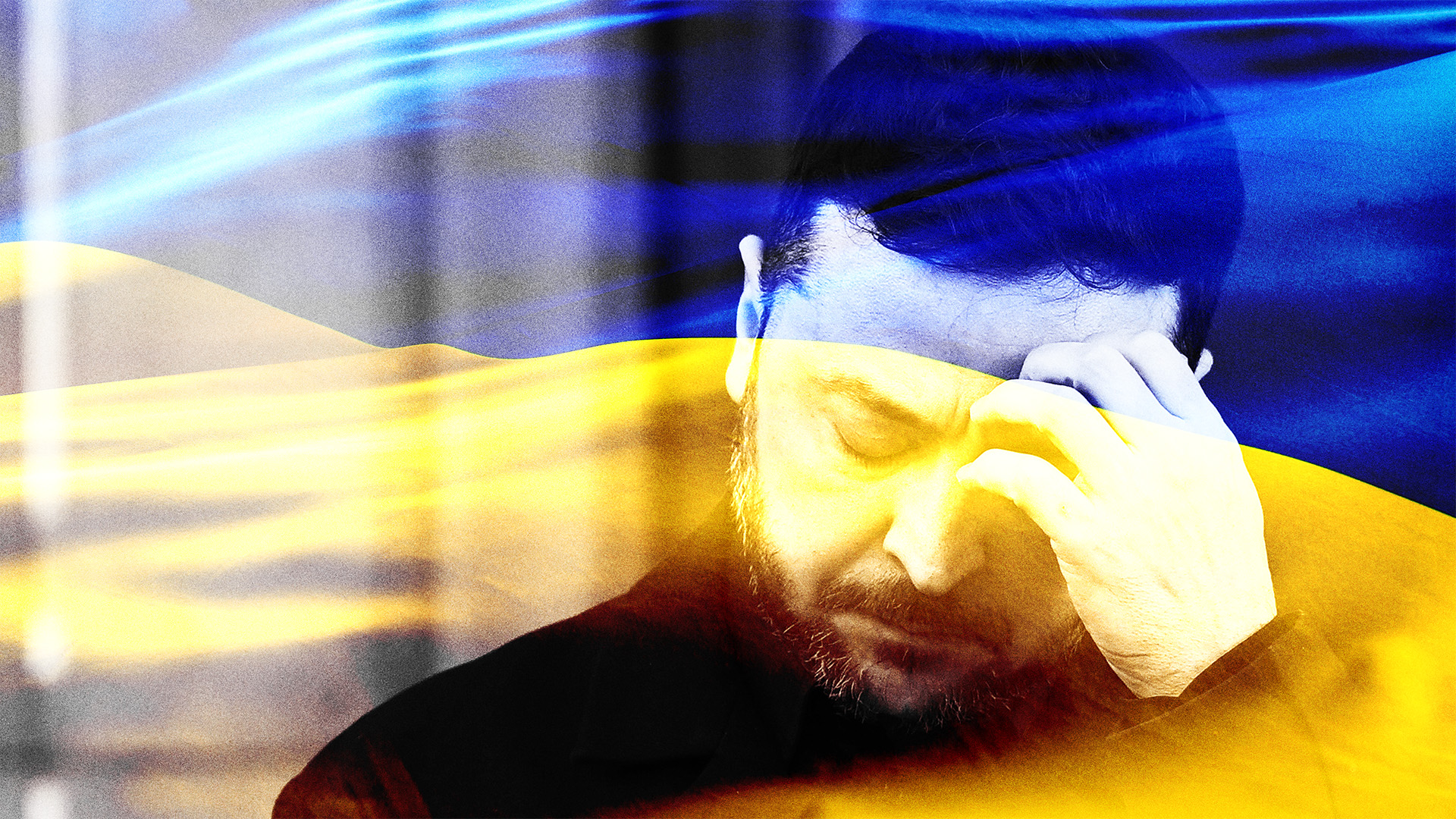
Ukraine’s president Vlodymyr Zelensky is clear that he wants to join the EU by January 1 2027. Commissioner Kos has the unenviable task of telling him that is impossible, while keeping alive the hope that one day it will happen.
Kos points out that the methodology used to assess new entrants today is not that different to the process which led to Spain and Portugal coming in four decades ago. “That was peace time. This is war time. We have to find ways of speeding up the process,” she says. You sense she feels the current crisis is existential not just for Ukraine but, if they fail, for Europe.
So there may be a way of getting countries into the EU in some shape or form as part of the process rather than the conclusion of the process. There are various ways that might be done, currently the subject of intense debate. Some are calling it gradual integration, others reverse membership.
This all bodes very well for my grand vision for European enlargement – that Ukraine, the UK and Canada all sign up on the same day.
Now we’re talking. And before you dismiss that as impossible… so was Brexit, until it wasn’t.
You might imagine hope is not an easy commodity to find in a place that has been on the receiving end of Putin’s war machine for four years, with over 100,000 Ukrainians dead and half a million injured. It may be a source of some pride that these are dwarfed by Russian losses, but they are horrific numbers nonetheless.
Add in the fact that five million Ukrainians are living elsewhere in Europe right now, mainly women and children, with little likelihood they can come back soon, and millions more displaced internally, and you understand why there is such a sense of war fatigue.
There is also among some here a feeling of shock and isolation that the world seemed to care so little when Putin decided to turn winter into a weapon of war. It has been freezing in recent weeks and in one nearby bombing strike on an energy plant the Russians deprived 350,000 people of heat in an instant. As the EU ambassador, Katarina Mathernova, put it to me: “Kyiv is a frontline city now. But it was so hard to get anyone interested. Too much is happening elsewhere in the world.”
Suggested Reading
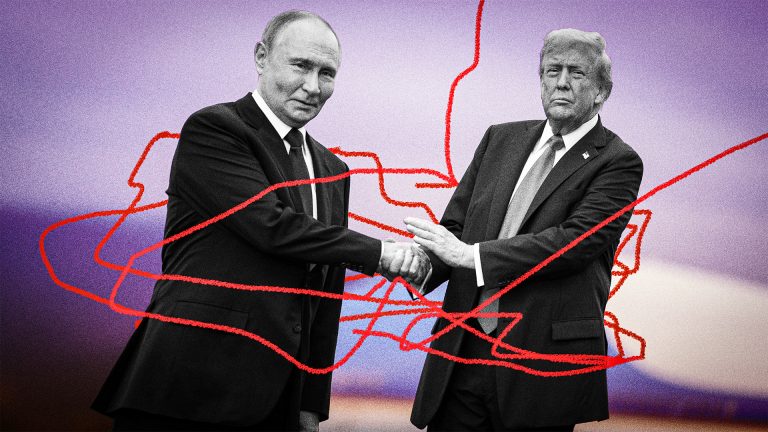
Trump’s Ukraine delusion
The consequences of war are visible – and deliberately so. The carcass of a train carriage has been moved from the scene of its bombing last month to a track at the main station. It is there to shock, and to underline that Putin’s pretence not to be targeting civilian life is exactly that. Indeed even he has given up pretending.
But then, walk a couple of yards down the platform, and there is another carriage, this one turned into a viable intensive care unit, used whenever the hospitals are overwhelmed. The third carriage is a children’s recovery unit, with beds even smaller than the one I couldn’t sleep in.
We then went to a briefing with the head of Ukraine’s railways, who on the one hand explains that the rail infrastructure suffered more than a thousand Russian attacks last year, including more than fifty locomotives damaged or destroyed, but on the other hand shows me a film of Ukrainian children brought home for a week’s holiday from their current homes in the EU. Smiling kids. Singing kids. Dancing kids. Hope.
There was more hope to be found when Marta Kos visited a Kyiv bookstore where a group of writers were discussing the importance of culture in their fight for survival. One of the panellists said that Sweden now had culture included in its national defence strategy.
Another said: “This war is a clash of culture, a clash of civilisations. We want freedom and democracy. Russia does not believe in freedom and democracy. They think everyone should be the same, think the same, obey the same leader.”
Summing that up, commissioner Kos came up with my favourite sentence of the week. “Every act of creativity is an act of resistance.” Love that. Poet Olena Herasymiuk had with her a poster, the number 289 in giant font, beneath it the names of the 289 Ukrainian writers and artists killed by Russia.
Then as we were about to leave, a young woman, Daryna Pidlubna, introduced herself in a way guaranteed to get my attention. “I loved your book, But What Can I Do? So what should I do to help my country?”
I gave a wholly inadequate answer – it’s not easy to tell an 18-year-old what she should be doing when her country is being bombarded – and then found myself asking if she still managed to feel optimistic, despite the horrors she has lived with for most of her life, Putin’s invasion of Crimea having happened when she was six.
“Yes,” she said. “Because what choice do you have? I wake up, check my phone, see who has been killed, where. I feel sad, of course, and I think of all the people I know who are dead or fighting, but then I think ‘what can I do to help my country today?’ and I go out and do it.” She was unbelievably impressive, and inspiring. Inspiring hope. You would be amazed how much of it we encountered.
As I mentioned in my column last week, the other fatigue to be aware of is the Ukrainians’ sick and tiredness at being told how resilient they are. I mean, they really are resilient. But they don’t want words of praise. They want tougher sanctions against Russia, and more support for themselves, hard power support, military kit with which to fight back against Russian aggression and seeming American indifference.
It must be so galling for the people here, like the people of Gaza, seeing their fate and their future being discussed by the key people in the US like this was some kind of gigantic property deal. It is hard to overstate how let down by the Americans people feel.
It was also, surely, a deliberate and scandalous snub, that the US sent nobody of significance from Washington to the Maidan Square memorial ceremony on Tuesday. If Marco Rubio can go to Budapest for a “vote Orbán” visit, and FBI chief Kash Patel can get to Milan to cosplay at being a Winter Olympian ice hockey champion, surely they could have found someone senior to represent the US as president Zelensky led tributes to the fallen. Some “ally”.
Suggested Reading
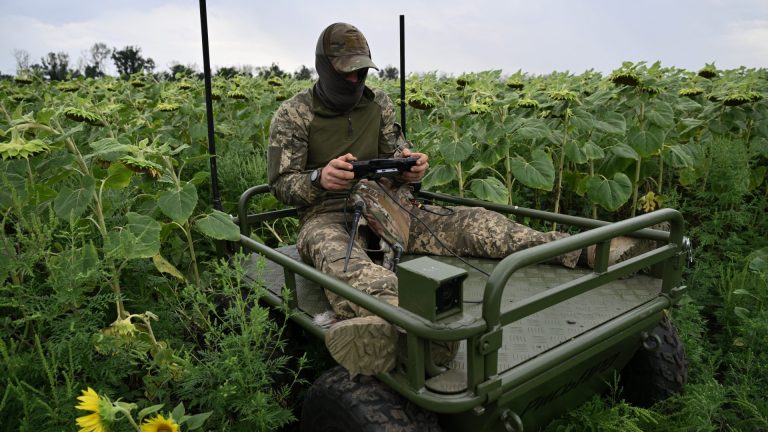
How Europe stops Gen Z going to war with Putin
At a meeting with civic society leaders, nobody tried to push back when Hannah Hopke, who heads something called the National Interest Advocacy Network, said: “We are sick of these fake negotiations which go nowhere. They are for theatre. It feels like Trump is more on Putin’s side than Ukraine’s.”
Trump’s golf buddy Steve Witkoff also has a remarkable capacity for saying things that get the gall factor going. Just two from recent days that stood out for me. “This is a very silly war.” Well that is one way of putting a fight between democracy and dictatorship, which has seen 1.2 million casualties so far. And then he followed up by saying that Putin has “always been straight with me”.
This is either naivety on a gargantuan scale, or fodder for the theory that Team Trump is essentially part of Team Putin.
It’s why Europe really does need to get into the centre of the negotiations, not the margins, no matter how resistant Putin may be.
Thankfully I managed to avoid Boris Johnson, but word came back to me that on his panel at the Hyatt hotel, he spoke strongly in favour of… wait for it… Ukraine’s entry into the EU. The hypocrisy is staggering, if unsurprising. He even had a little wisecrack to go with it… “we have created a big vacancy.” Hilarious.
I did meet another former Tory MP, Jack Lopresti, who lost his seat at the last election, and immediately signed up for the Ukrainian Army. “You just go online, the process was pretty easy,” he told me. So there he was, in uniform, with his Ukrainian comrades, and I thought fair play, well done.
At 68, I must surely be considered too old. However, at one of the security checks on the train, a Ukrainian border official looked at my passport, looked at me, and said: “Why you are going to Ukraine? Military?”
I glowed with pride that he thought I might be. “Special forces,” I said. He nodded, gave me back my passport, and continued on his journey.