
I hope you have enjoyed the 2025 transition from The New European to
The New World. I hope, too, that you understand that the title change does not diminish our determination to ensure that the lies, crimes and misdemeanours of Brexit are never forgotten, and the fight to undo its damage never ends.
Part of the thinking behind the rebrand was that there were people who thought that Europe was all we cared about. While it is true that it was the disastrous 2016 referendum result that sparked Matt Kelly into founding the paper, we like to think we have a global perspective and, as anyone who reads us will know, we regularly feature themes, people and places barely touched by much of the British media.
So I was delighted, when Matt asked me to reach out to influential international voices to join us, that Moisés Naím, Venezuelan former minister turned author and public intellectual, agreed to do so, as a contributing editor. You may have read extracts we ran earlier this year of his brilliant book, Charlatans, (Donald Trump, Brexit, Nigel Farage and Boris Johnson figure large). You may have heard me referring to the “3Ps”, which Naím has identified as drivers of the mess so much of our world politics are in – populism, polarisation and post-truth communications.
Suggested Reading
American civilisation is at risk – but I’m still going
Now he has come up with three C-words (no, not Trump, Farage, Johnson again) to explain why so many parts of his native Latin America have followed down the 3P route that led to Brexit and Trump Term One just under a decade ago. Crime. Corruption. Cruelty.
In a nutshell: to win power, populist leaders focus on immigration and crime; once in power, they indulge hugely in corruption, because part of the motivation to get political power is access to economic power; and central to governing is performative cruelty.
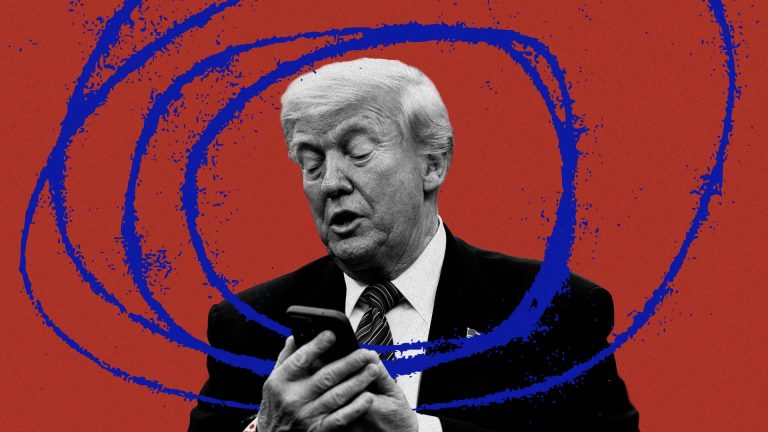
Trump, with his masked ICE thugs, withdrawal of security from political foes, use of lawfare to go after critics, demonising of most things non-white and non-American – including whole countries – bombing raids on fishing boats he claims to be running drugs, the rhetoric he unleashes on anyone who refuses to be a fully fledged fanboy or fangirl, is a master of the art of cruelty. The reason for his man-crush on Nayib Bukele is the scale of the brutality the president of El Salvador brings to his fight against crime.
And let’s not forget that when a reporter raised the death of the journalist Jamal Khashoggi, who was hacked to death by the Saudis inside their consulate, and US intelligence concluded it was carried out on orders from on high, Trump’s response was to attack the US reporter and Khashoggi, not the Saudi leader, Mohammed bin Salman, who was sitting alongside him.
3Ps was bad enough. Add in the 3Cs and we have a very worrying formula, as Trump enters what might be, pre-midterms, his last year enjoying what has felt for the past 12 months like unbridled power. His crime rhetoric remains high voltage, getting higher. Corruption, if defined as the meshing of personal and political interests by people in power, is off the scale. The cruelty is firmly embedded in his approach to the job, in word and deed.
With my editor-at-large hat on, might I suggest, Matt, that we ask Moisés Naím to write for us about how the 3Cs are playing out in the Americas, and how they play into the broader fight of our times, between democracy and autocracy, order and chaos, and most importantly, how we fight back?
Naím is not the only one to think in triptychs, nor the only one to have 3Cs. I have been reading a book by Finland’s president, Alexander Stubb, The Triangle of Power, a very insightful analysis of the new world order forming in what he defines as a moment in history as consequential as 1918, 1945, or 1989.
He sees a world of three major forces, the Global West (US plus allies), the Global East (China, Russia and a smaller number of allies), and the Global South (large parts of Asia, Africa, the Middle East, much of Latin America.) His 3Cs are competition, cooperation and conflict, which, he argues, will determine how the balance of power between these three forces turns out.
“Competition can spill into conflict unless it is contained by cooperation. Conflict makes both competition and cooperation difficult, sometimes impossible. Cooperation can foster fair play to support healthy competition and prevent it from becoming conflict.”
For Stubb’s 3Cs to work, you need a shared appreciation of, and respect for, international institutions, and he is right that we have to regain that, not least by modernising the ones we have. The problem is that for the leaders operating according to Naím’s 3Cs, institutions are the last thing they appreciate or respect and right now, too many of them think they’re winning.
While I’m in book-promo mode, I strongly recommend Where’s The Money Gone? by Adrian Goldberg. The money in question is the billions that flow through modern English football, and West Bromwich fan Goldberg chronicles the hugely damaging Chinese takeover of his own club, alongside the colonisation by oligarchs, petrostates and hedge funds of clubs far bigger than his.
To a lifelong football obsessive like me, it is an important but depressing read, all contributing to the sense the upcoming World Cup fuels, that a great game has lost its soul.
Vladimir Putin is without doubt a 3P3C leader – perhaps that’s why Trump likes him so much – and he features prominently in Chapter 16, The Roman Empire. The “Roman” in question is Roman Abramovich who became very, very rich during the corrupt Boris Yeltsin sell-off of post-Soviet assets, and moderately respectable in UK society through his purchase of Chelsea Football Club in June 2003.
That was not a great time for me, as the fallout from the Iraq war was dominant in our politics, and I was heading towards the exit door from Downing Street to spend more time with my family and my football club. So perhaps I wasn’t as focused on the Chelski takeover as I should have been.
Our former sports minister, Tony Banks, was a massive Chelsea fan. Sadly no longer with us, he said at the time: “We need to look at the source of his money, what his track record has been in Russia, to establish whether he is a fit and proper person to take over a football club in this country. At the moment, I don’t like it.”
He was right not to. Yet it took the invasion of Ukraine almost 20 years later before Abramovich was sanctioned and forced to sell the club.
Banks was, says Goldberg, a voice in the wilderness, and successive governments of both colours turned a blind eye to Russian money in London, in part because of the role it played in making the Premier League a global brand and an important part of our soft power. We are paying a hard-power price right now while Abramovich continues to enjoy his billions, and Putin just keeps on being Putin.
Burnley were at home to Chelsea in the week of the Ukraine invasion, and all Premier League games were preceded by a minute’s applause in support of Ukraine. We were all clapping away when suddenly a chant went up in the away end: “Roman Abramovich… Roman Abramovich.”
Boos rang around the rest of the stadium, and the referee blew his whistle before the minute was out… Putin would have loved it. It’s always been hard to like Chelsea.